The United Kingdom is home to one of the largest Nigerian communities outside Africa. Nigerians have settled across many British cities, contributing to culture, business, education, and politics. Below are
The United Kingdom is home to one of the largest Nigerian communities outside Africa. Nigerians have settled across many British cities, contributing to culture, business, education, and politics. Below are
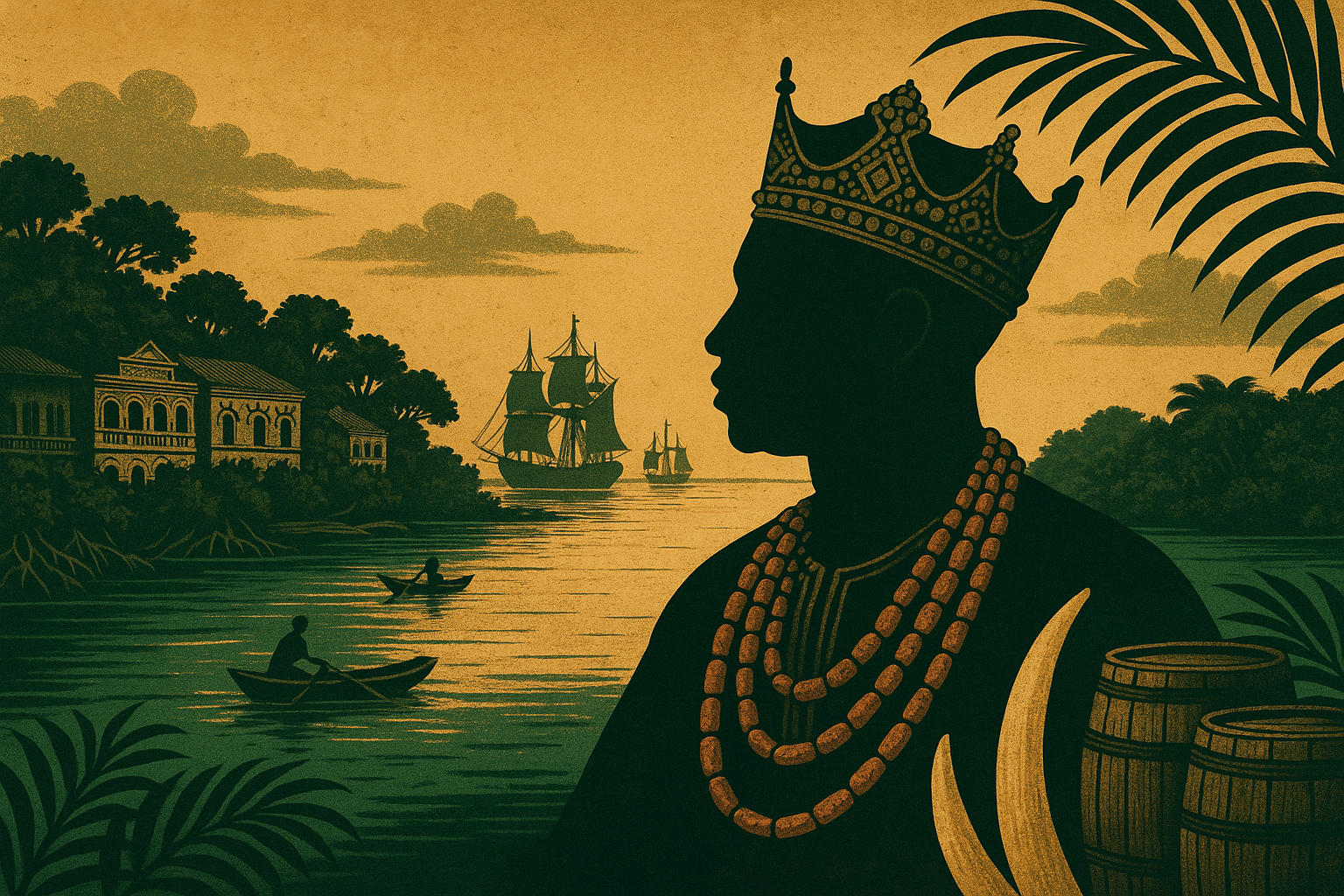
Akitoye (d. 1853) was the Oba of Lagos in two non-consecutive reigns—1841–1845 and 1851–1853. Deposed by his powerful nephew Kosoko, Akitoye returned to the throne with British naval support after

The Atlantic slave trade reshaped societies along the Gulf of Guinea for four centuries. In the region that is now Nigeria, coastal ports, riverine kingdoms, and inland states became enmeshed

Nigeria’s deep past stretches from Late-Pleistocene hunter-gatherers to inventive farmers, artists, navigators, and early iron smelters. Long before written records, people here were shaping landscapes, painting rock shelters, carving monoliths,

Michael Taiwo Akinkunmi (10 May 1936 – 29 August 2023) was the Nigerian student whose simple sketch—three vertical bands of green–white–green—became one of Africa’s most recognizable national symbols. His design,

From Colony to Nation Before independence, the area that became Nigeria flew British colonial ensigns—standard Blue or Red Ensigns defaced with a local badge. On 1 October 1960, at the

Behind the name of Africa’s most populous nation stands an often-overlooked figure—Flora Shaw (1852–1929). A journalist, writer, and later colonial administrator’s wife, Flora Shaw coined the term Nigeria in the

Nigeria, Africa’s most populous country and one of the continent’s cultural powerhouses, carries a name that is both historic and symbolic. But where did the word Nigeria come from, and

Few events capture the heart of Nigerian culture quite like a wedding. Grand, colorful, and full of music, Nigerian weddings are more than just ceremonies—they are community festivals that blend

Food security—defined as reliable access to sufficient, safe, and nutritious food—is becoming one of Nigeria’s most pressing issues. Rising prices, climate change, and insecurity are threatening not only the availability