Nigerian Jollof
The Party Classic · Smoky Flavor · Cultural Icon
Explore the undisputed king of West African festive cuisine, famous for its rich tomato base, fiery spice, and the signature smoky flavor that defines the Nigerian party experience.

The heartbeat of an
Owambe party
Nigerian Jollof Rice is much more than a meal; it is a cultural institution. It forms the centerpiece of nearly every celebration in Nigeria, from elaborate weddings (Owambe) and festive holidays to Sunday family dinners. While its origins trace back to the Wolof people of Senegal, the Nigerian adaptation is distinctly its own, commanding fierce national pride.
What sets the Nigerian version apart is the use of long-grain parboiled rice cooked down in a concentrated, spicy puree of tomatoes, bell peppers (tatashe), onions, and scotch bonnets (ata rodo). The broth is heavily seasoned with curry powder, thyme, bay leaves, and rich meat stock.
The crowning glory of authentic Nigerian Jollof is its signature smoky flavor. Affectionately known as "Party Jollof," this taste is traditionally achieved by cooking large cast-iron pots over open firewood, deliberately allowing the rice at the bottom to burn and infuse the entire dish with a rich, wood-smoke essence.
- The Pepper Blend: A pureed mix of tomatoes, red bell peppers, onions, and scotch bonnets.
- The Spices: Thyme, curry powder, white pepper, and bay leaf give it an earthy depth.
- The Stock: Rich beef or chicken broth forms the liquid cooking base.
- The "Bottom Pot": The slightly scorched rice at the base of the pot, prized for its intense flavor.
Cultural Impact
The significance of the dish in everyday life
Building the Flavor
Understanding the components of a perfect pot
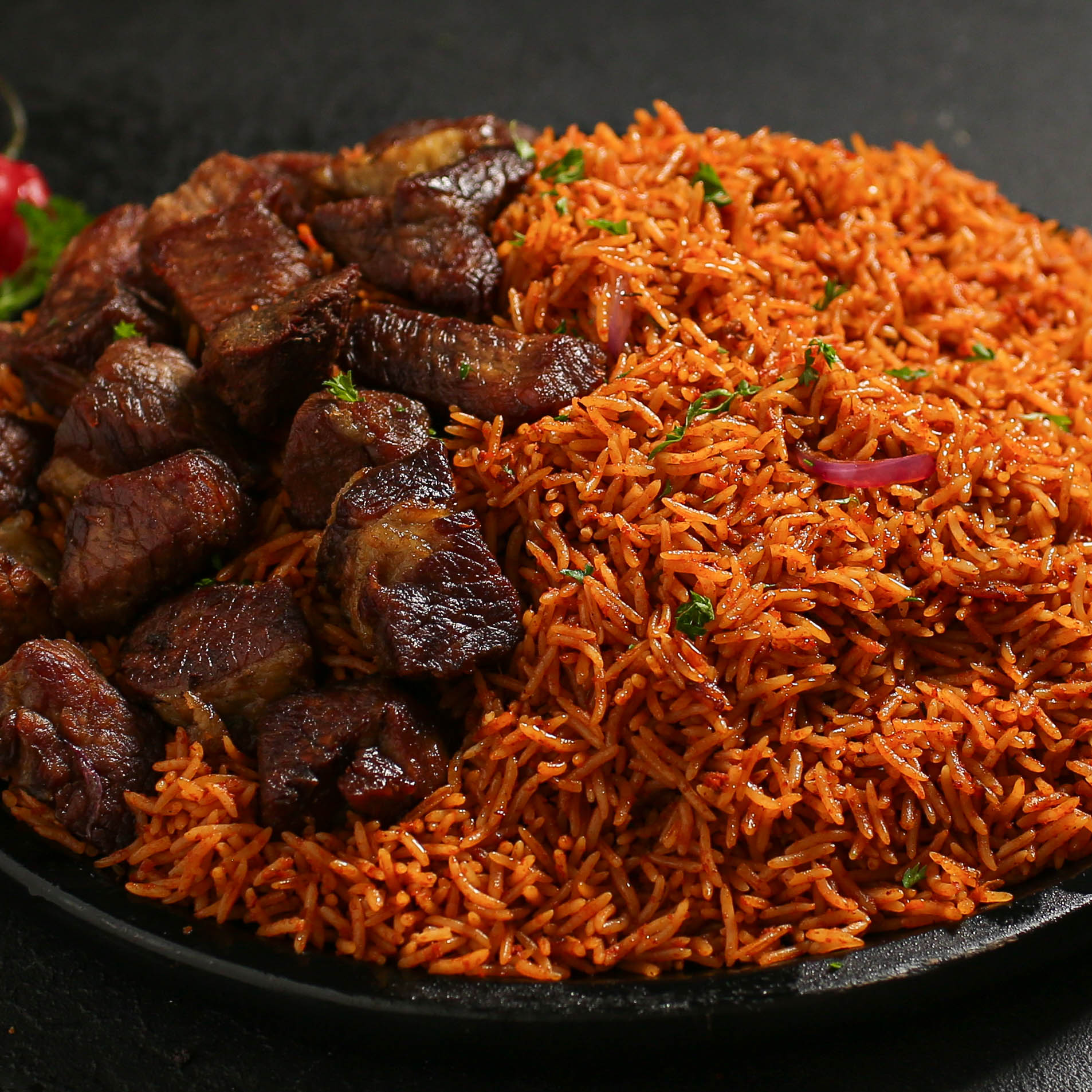
A classic serving of vibrant, deeply colored Nigerian Jollof rice, the undisputed centerpiece of any West African celebration.
| Grain Type | Nigeria: Long-grain parboiled Ghana: Perfumed Basmati/Jasmine |
|---|---|
| Tomato Profile | Nigeria: Heavy on tomato paste & tatashe Ghana: Lighter, relies more on fresh tomatoes |
| Spice Core | Nigeria: Bay leaf, Curry, Thyme, Smoky heat Ghana: Ginger, Garlic, Shito (pepper sauce) |
| Cooking Method | Nigeria: Steamed in heavy meat stock until bottom burns Ghana: Stewed in a lighter broth |
| Texture | Nigeria: Firm, distinct grains Ghana: Softer, more aromatic |
The Culture of Jollof
How a single dish defines national celebrations
In Nigeria, an event without Jollof rice is considered incomplete. Known as "Party Jollof," it is cooked in massive quantities over firewood for weddings, birthdays, and naming ceremonies. The firewood imparts a distinctive smokiness that home-cooked, stovetop Jollof struggles to replicate.
The secret to the perfect Nigerian Jollof is allowing the rice to scorch at the bottom of the pot. This slightly burnt layer is intensely flavorful, highly concentrated with spices and tomato paste. It is a prized delicacy, often fought over by family members after the main meal is served.
As the Nigerian diaspora grows, Jollof has become a global culinary ambassador. It is now featured on menus in London, New York, and beyond, introducing Western palates to West African spices and generating significant interest in African gastronomy worldwide.
While classic tomato-based Jollof reigns supreme, variations exist. Coconut Jollof replaces water or stock with rich coconut milk for a sweeter, aromatic profile. Oven-baked Jollof is a modern method used by diaspora cooks to achieve the "party smoke" flavor without open firewood.
Ingredients & Pairings
Building the perfect plate
| Ingredient | Role in Dish |
|---|---|
| Long-grain Parboiled Rice | Provides firmness, absorbs stock without going mushy. |
| Tomato Paste | Crucial for the deep, rich red color and slight tang. |
| Tatashe (Red Bell Pepper) | Adds volume, sweetness, and deep red color to the puree. |
| Ata Rodo (Scotch Bonnet) | Provides the signature fiery Nigerian heat. |
| Meat Stock | Usually rich beef or chicken broth, the primary cooking liquid. |
| Accompaniment | Description |
|---|---|
| Dodo (Fried Plantain) | Sweet, caramelized contrast to the spicy, savory rice. |
| Moi Moi | Steamed savory bean pudding, often packed with egg or fish. |
| Assorted Meat | Deep-fried or stewed beef, chicken, or goat meat. |
| Coleslaw / Salad | Provides a cool, creamy textural crunch. |
| Chilled Malt | The quintessential sweet, non-alcoholic beverage pairing. |