Now Reading: The Role of Religion – Churches, Faith, and Survival During the Nigerian Civil War
-
01
The Role of Religion – Churches, Faith, and Survival During the Nigerian Civil War

The Role of Religion – Churches, Faith, and Survival During the Nigerian Civil War

(Part of the Nigeria234.com Civil War Series (1966–1970))
📝 Introduction
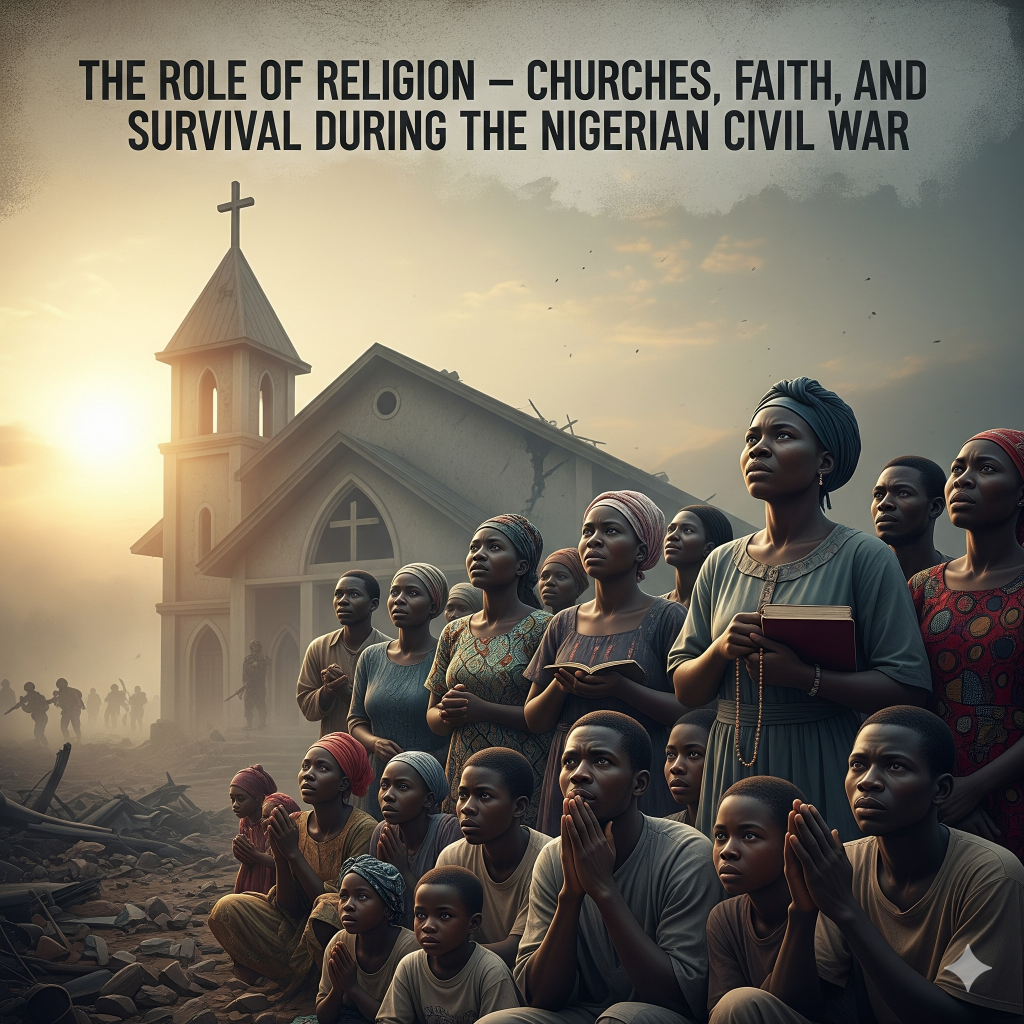
In the Nigerian Civil War (1967–1970), religion was not the cause of conflict — it was not a war of Christians against Muslims. Yet faith and churches played a central role in sustaining people, shaping narratives, and driving humanitarian aid. For millions of Nigerians trapped in war, religion became a refuge of hope, identity, and survival.
✝️ Christianity in Biafra
- Eastern Nigeria, the heart of Biafra, was overwhelmingly Christian (Catholic, Anglican, and Protestant).
- Churches became:
- Refuge centers for displaced people.
- Hospitals and clinics, where priests and nuns treated the sick and wounded.
- Distributors of relief aid, working with international NGOs.
- The Catholic Church was especially influential: priests like Father Cicero Onyeneke and missions in Owerri and Umuahia coordinated food distribution.
☪️ Islam in Federal Nigeria
- On the Federal side, many leaders — including Gowon’s northern allies — were Muslim, but the Federal cause was not framed as an Islamic struggle.
- Muslim soldiers and communities in the North prayed for victory but also donated to relief efforts.
- Religious leaders appealed for national unity and forgiveness after the war.
🌍 Churches and Humanitarian Aid
- Religion played a huge role in global humanitarian response:
- Caritas Internationalis (Catholic aid agency) organized massive food shipments to Biafra.
- World Council of Churches coordinated Protestant missions in relief flights.
- Nighttime airlifts of food and medicine to Biafra often relied on church networks.
- The involvement of faith groups gave the crisis strong visibility in Europe and North America, mobilizing sympathy for Biafra.
🙏 Faith as Comfort in Hardship
- In refugee camps, daily prayers and hymns gave people hope despite famine.
- Families clung to faith as they buried loved ones lost to starvation or bombing.
- Clergy often risked their lives to move between frontlines, carrying messages of peace.
⚡ Religion in Propaganda
- Biafra often framed its struggle in Christian moral terms — portraying itself as a Christian nation persecuted by a hostile Federal Nigeria backed by foreign powers.
- Federal Nigeria, however, stressed that the war was about unity, not religion, to prevent it from becoming a faith-based conflict.
🕊️ Postwar Reconciliation and Faith
- After the surrender in 1970, religious leaders played a central role in healing wounds.
- Churches and mosques preached Gowon’s message of “No victor, no vanquished.”
- Faith-based institutions helped reintegrate ex-soldiers, orphans, and widows into society.
💬 Reflection
“In the midst of bombs and starvation, it was prayer, hymns, and faith that kept many Nigerians alive.”
🌟 Conclusion
Religion in the Civil War was not about dividing Nigeria, but about sustaining its people. Churches and mosques became sanctuaries of survival, while global Christian networks brought aid that saved countless lives. The Civil War showed that in times of despair, faith is as powerful as food and medicine in keeping hope alive.










Related Posts


Stay Informed With the Latest & Most Important News
Previous Post
Next Post


Advertisement