

Wole Soyinka
Nobel Laureate · Playwright · Poet · Activist
Explore the life, works, and fearless activism of Akinwande Oluwole Babatunde Soyinka, Africa's first Nobel Laureate in Literature and a towering figure in global theater.
The Conscience of
a Nation
Akinwande Oluwole Babatunde Soyinka (born July 13, 1934) is a Nigerian playwright, novelist, poet, and essayist. In 1986, he made history as the first sub-Saharan African to be awarded the Nobel Prize in Literature. Recognized for his "wide cultural perspective and... poetic overtones," Soyinka's work masterfully bridges Western theatrical traditions with the deep, spiritual mythology of the Yoruba people.
Beyond his literary genius, Soyinka is equally famous for his fierce political activism. He has spent his life speaking truth to power, confronting both British colonialism and the brutal military dictatorships that dominated post-independence Nigeria. His activism during the Nigerian Civil War led to 22 months of solitary confinement without trial, an ordeal chronicled in his searing memoir, The Man Died.
A true renaissance man, Soyinka has taught at the world's most prestigious universities, founded multiple theater groups, and remained an unapologetic critic of corruption and tyranny, solidifying his legacy as the moral conscience of his nation.
- Yoruba Cosmology: Heavily influenced by Ogun, the Yoruba god of iron, war, and creative destruction.
- Justice & Truth: Famously quoted: "The greatest threat to freedom is the absence of criticism."
- Global Humanism: Merging indigenous African traditions with universal human rights and struggles.
A Legacy in Numbers
The scale of Soyinka's literary and political impact
Explore the Legend
The different facets of Soyinka's career
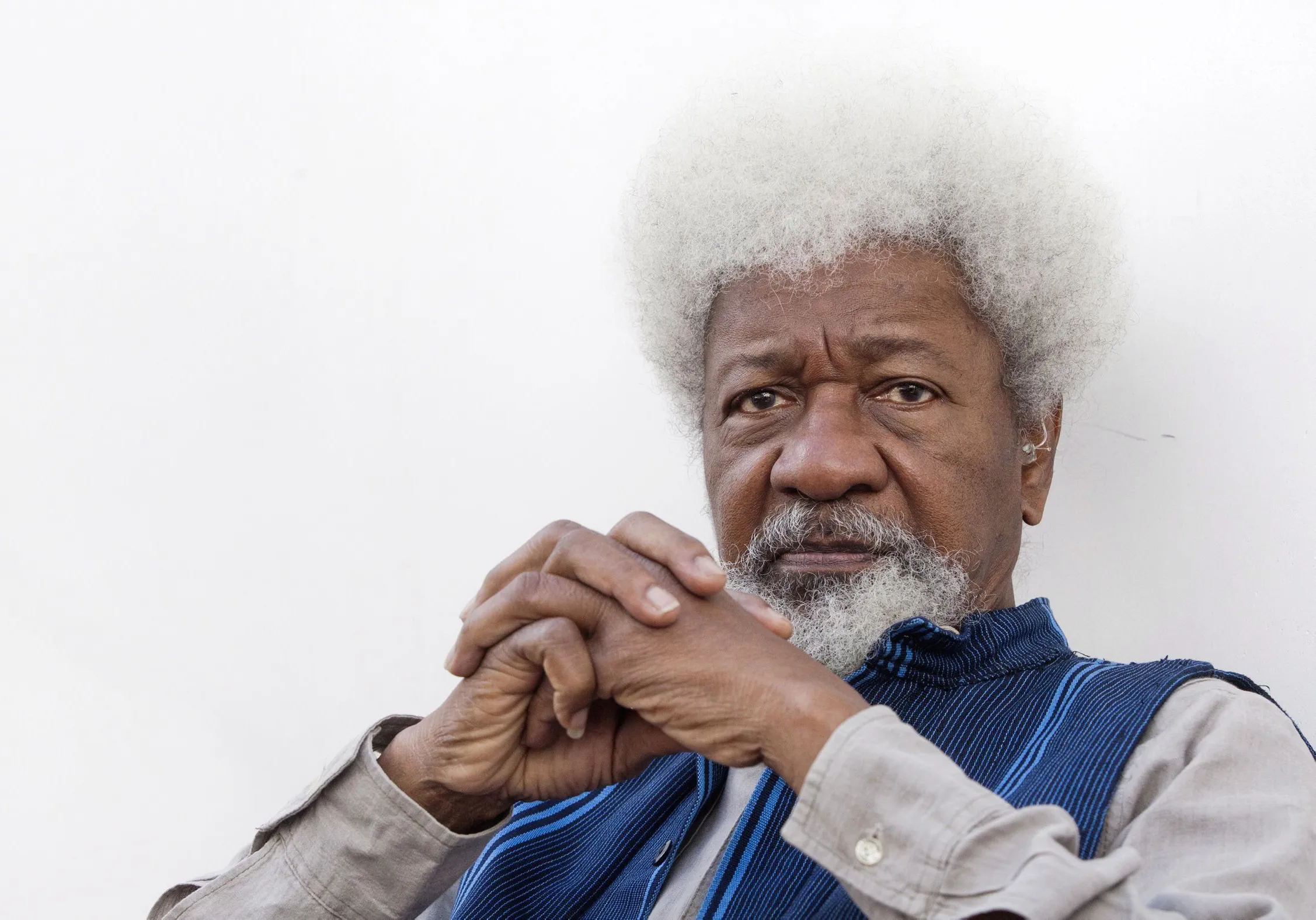
Wole Soyinka, whose signature white afro and commanding presence are as iconic as his literary contributions.
| 1959 | The Lion and the Jewel (Play) |
|---|---|
| 1960 | A Dance of the Forests (Play) |
| 1965 | The Interpreters (Novel) |
| 1972 | The Man Died: Prison Notes (Memoir) |
| 1975 | Death and the King's Horseman (Play) |
| 1981 | Aké: The Years of Childhood (Memoir) |
| 2006 | You Must Set Forth at Dawn (Memoir) |
| 2021 | Chronicles from the Land of the Happiest People on Earth (Novel) |
Themes & Impact
The core philosophies of Soyinka's art and life
Soyinka's work is deeply steeped in Yoruba cosmology. He views Ogun—the god of iron, metallurgy, and war—as the ultimate symbol of the artist: a solitary, daring figure who bridges the gap between the gods and mortals through creative and sometimes destructive action.
In 1967, during the lead-up to the Nigerian Civil War, Soyinka secretly met with Biafran leader Odumegwu Ojukwu to avert the conflict. The federal government accused him of treason and held him in solitary confinement for 22 months. His prison notes, written on toilet paper and cigarette packs, became the seminal book The Man Died.
Soyinka has consistently opposed military rule. In 1994, facing arrest by the brutal regime of General Sani Abacha, he fled Nigeria on a motorcycle via the "NADECO route" to Benin Republic. In exile, he campaigned fiercely against the junta until democracy was restored in 1999.
An eminent scholar, Soyinka has held professorships at the University of Ife (now Obafemi Awolowo University), Cambridge, Harvard, Yale, and Cornell, among others. His dramatic theories and literary criticism continue to shape the global study of post-colonial and African theater.
Awards & Masterpieces
Selected global recognition for Wole Soyinka
| Year | Award | Institution / Country |
|---|---|---|
| 1986 | Nobel Prize in Literature | Swedish Academy |
| 1986 | Commander of the Order of the Niger | Federal Republic of Nigeria |
| 1990 | Benson Medal | Royal Society of Literature (UK) |
| 2014 | International Humanist Award | IHEU |
| 2017 | Europe Theatre Prize | Special Prize |
| Play | Theme/Setting |
|---|---|
| The Lion and the Jewel | Tradition vs. Western modernization in a Yoruba village. |
| Death and the King's Horseman | A colonial intervention prevents a ritual suicide, causing cosmic imbalance. |
| A Dance of the Forests | Written for Nigeria's independence; a critique of romanticizing the past. |
| Kongi's Harvest | A satirical takedown of African dictatorships and personality cults. |
| The Strong Breed | A study of the scapegoat ritual in traditional society. |
Literary Archives
See also & internal links
Go deeper


