Now Reading: Youth in Politics: A Comprehensive Analysis of the Increasing Influence and Activism of Young Nigerians
-
01
Youth in Politics: A Comprehensive Analysis of the Increasing Influence and Activism of Young Nigerians
Youth in Politics: A Comprehensive Analysis of the Increasing Influence and Activism of Young Nigerians


I. Introduction: The Demography of Disruption
Nigeria’s political landscape is undergoing a profound transformation, driven by the immense demographic weight of its youth population. With an estimated 70% of the country’s citizens under the age of 30, Nigeria possesses a formidable cohort of young people, creating a “new generation of reform-minded political agitators”. This youth bulge is not merely a statistical figure but a fundamental force shaping the nation’s future. The 2023 elections, in particular, underscored this reality, with youth comprising more than a third of Nigeria’s 93.4 million registered voters and an overwhelming 84% of the 10 million new registrants. This immense demographic power, however, exists in paradoxical tension with their critical under-representation in formal political structures, as evidenced by the fact that only a tenth of the National Assembly is under the age of 45. This disconnect between the governed and those who govern is a deep-seated structural problem, and it is the primary source of youth disillusionment and their turn to alternative, non-traditional channels of political expression.
The central argument of this report is that young Nigerians are orchestrating a paradigm shift in the nation’s political engagement. They are increasingly moving away from conventional, party-based participation, which has historically excluded them, toward unconventional, issue-driven activism. The prevailing liberal democratic system has largely failed to create a space for their voices, leading to a significant gap between citizens and decision-makers. Consequently, youth have been compelled to redefine the very concept of “politics” for themselves, expanding it beyond party meetings and ballot boxes to include a diverse array of civic acts. These actions, such as organizing demonstrations, signing petitions, and mobilizing through social media, reflect a shift from what has been described as “dutiful” to “self-actualizing” citizenship, where direct action and the “politics of choice” are prioritized over traditional forms of participation. This re-conceptualization of political engagement is essential for understanding the nature of modern Nigerian activism.
This report provides a multi-faceted analysis of this evolving political dynamic. It will first trace the historical roots of youth activism, from the nationalist era to modern movements. Subsequently, it will dissect the complex interplay of socio-economic and political factors that drive contemporary engagement. Case studies on the impactful #EndSARS and the “Not Too Young To Run” movements will evaluate their tangible effects on electoral processes and policy reforms. The report will then explore the pivotal role of social media as both a tool for empowerment and a source of new challenges. A thorough examination of the persistent systemic and institutional obstacles to youth participation, including financial gatekeeping and state repression, will follow. The analysis will then place the Nigerian experience within a broader African context, concluding with data-driven recommendations to foster a more inclusive and enabling environment for youth political participation.
II. A Historical Trajectory of Youth Engagement
The foundation of youth political consciousness in Nigeria is deeply rooted in the nation’s history, predating its independence. The narrative of youth engagement shows a clear evolution, from organized institutional movements to more confrontational forms of resistance, a pattern that has laid the groundwork for contemporary activism.
2.1 The Nationalist Roots: The Nigerian Youth Movement (NYM)
Youth political engagement in Nigeria can be traced to the pre-independence era with the establishment of the Nigerian Youth Movement (NYM) in 1934. The NYM holds a seminal place in the country’s history as its “first genuine nationalist organization” and the first multi-ethnic one, founded with the purpose of fostering the nation’s political advancement and enhancing the socio-economic status of its citizens. While its initial concerns were pragmatic—such as addressing the inferior status of Yaba College and advocating for African appointments in the civil service—its ambitions were national in scope. The movement’s influence grew exponentially with the inclusion of nationalist icons like Nnamdi Azikiwe and Obafemi Awolowo in the late 1930s, cementing its status as the first authentic Nigerian nationalist organization. The NYM demonstrated its political potency through a significant electoral victory in the Lagos Town Council in 1938, which effectively ended the dominance of the National Democratic Party. In the same year, the movement published its Youth Charter, which explicitly rejected the colonial system of “Indirect Rule” and articulated a vision to unify Nigeria’s tribes toward a common ideal of self-government.
2.2 The Post-Independence Era: The “Ali Must Go” Protests
In the post-colonial period, youth activism evolved from a formal, institution-building approach to a more direct and confrontational form of principled rebellion. This was exemplified by the “Ali Must Go” protests of 1978. Sparked by a sudden increase in student fees, the protests quickly escalated into a nationwide crisis for the military government of the time. The demands of the student activists went far beyond the fee hike, encompassing broader calls for “democratization, genuine independence and enhancement of the quality of life of the masses”. The government’s brutal response, which resulted in the killing of several students, did not quell the movement. Instead, it cemented the protests’ place in history, demonstrating the power of students to “mobilize across the country and carry out effective agitation and force change” against the state. This violent state response created a critical historical precedent for the deep-seated conflict between youth activists and state actors. It established a pattern of criminalizing peaceful dissent and responding with force, a dynamic that would reappear decades later in events such as the Lekki Toll Gate incident. The historical record thus reveals a consistent theme: youth have consistently served as the “arrowhead anywhere change is likely to take place, whether through the ballot, bullet, or radical revolution”.
Table 1: Key Youth-Led Movements in Nigeria’s Political History
| Movement | Dates | Key Demands | Primary Tactics | Notable Outcomes |
| Nigerian Youth Movement (NYM) | 1934-1951 | Political advancement, socio-economic status for Nigerians, end to Indirect Rule, constitutional reform | Organized movement, nationalist advocacy, electoral participation, newspaper publication | Won Lagos Town Council election, published the Youth Charter, became Nigeria’s first genuine nationalist organization |
| “Ali Must Go” Protests | 1978 | Reversal of fee increment, democratization, enhancement of quality of life | Nationwide lecture boycotts, public demonstrations | Forced government to shut down universities, legitimized the power of student unionism, led to a government inquiry into the events |
| #EndSARS Movement | 2020 | End to police brutality, disbandment of the Special Anti-Robbery Squad (SARS), wider police and governance reforms | Decentralized protests, digital activism, social media mobilization | SARS was disbanded, judicial panels of inquiry were established, garnered international attention |
III. The Catalysts of Contemporary Youth Activism
The rise of contemporary youth activism in Nigeria is not a random occurrence but the result of a powerful confluence of socio-economic, political, and technological factors. These elements have transformed pre-existing youth frustration from a localized, individual sense of powerlessness into a coordinated, national, and visible force for change.
3.1 Socio-economic Grievances
The research points to a clear nexus of socio-economic factors that serve as a powerful motivator for youth engagement. Chronic unemployment, particularly for the youth demographic (a staggering 42.5% for those aged 15-34), and persistent high inflation, which was around 22% as of recent reports, create widespread frustration and a sense of desperation. These “existential challenges,” often compounded by a lack of functional education and infrastructure, are frequently ignored in governance and development planning. This neglect leaves a large, energetic population “weighed down by chronic unemployment” and vulnerable to social dislocation and radicalization. This shows that youth apathy was not a lack of interest but a lack of a viable channel for expression. The compounding effects of unemployment and corruption created a “cognitive opening” for dissent, and modern tools provided a means to channel this frustration into organized activism. A new archetype of the Nigerian activist has emerged: the “frustrated activist”. These individuals are not driven by simple desperation; they are often highly educated and community-engaged, yet face high unemployment and deprivation. Their activism is a demand for a just return on their investment in themselves and a fair chance to participate in society, a call that the formal system has largely failed to answer.
3.2 Political Exclusion and Institutional Distrust
A deep-seated distrust in state institutions and the political process itself is a core driver of youth activism. The Nigerian political landscape is widely viewed as a gerontocracy, systematically excluding young people from meaningful participation. The process is seen as being “captured by money bags and the entrenched elite” , with internal party democracy perceived as a “cruel joke” decided in cash-filled rooms. This pervasive institutional distrust is a direct response to a political system that fails to represent or serve its largest demographic. The consistent pattern of government officials abhorring criticism and responding with resistance, illegal detention, and human rights abuses has put off many young people from conventional political engagements. This exclusion has, in effect, become a “breeding ground” for the very frustration that fuels activism and, in some cases, violent extremism.
3.3 The Digital Accelerator
Technology and social media have been a “pivotal” force in the recent surge of youth activism. Platforms such as Twitter, Instagram, TikTok, and WhatsApp have provided a means for activists to “amplify their voices, mobilise supporters, and document their struggles”. The widespread adoption of smartphones and declining internet costs have transformed social media into a “unique and revolutionary way of political participation” that bypasses traditional media gatekeepers and political elites. This new form of “digital activism” has enabled youth to engage in political socialization, receive and share political information, and even organize protests. This has fundamentally changed the role of the individual in political communication, moving them from a passive information consumer to an active contributor to the political discourse, as demonstrated by the viral TikTok of Ushie Rita Uguamaye, who openly criticized the government and sparked a nationwide debate.
Table 2: The Nexus of Youth Activism Drivers
| Category | Specific Driver | Impact on Youth Activism |
| Socio-economic | High Unemployment (42.5% for ages 15-34) | Creates frustration, social dislocation, and a sense of desperation, fueling a demand for systemic change. |
| Pervasive Corruption & High Inflation | Hinder economic growth and contribute to a lack of faith in leadership, democracy, and the system. | |
| Political | Institutional Distrust & Exclusion | Drives youth away from conventional politics and towards alternative, non-traditional forms of engagement. |
| Gerontocratic Political System | Systematic exclusion from formal power structures, which perpetuates generational exclusion and a lack of fresh ideas. | |
| Technological | Social Media & Digital Platforms | Acts as an accelerator for mobilization, information dissemination, and advocacy, bypassing traditional gatekeepers. |
| Civic Technology (Civic Tech) | Facilitates voter education, electoral monitoring, and accountability, empowering youth to engage in the electoral process. |
IV. Case Studies in Modern Youth Activism and Influence
The influence of Nigerian youth is best understood through a detailed examination of their most prominent modern movements. The #EndSARS protests, the “Not Too Young To Run” campaign, and the “Obidient Movement” each represent a distinct form of political engagement, from street-based dissent to legislative reform and electoral mobilization.
4.1 The #EndSARS Movement (2020)
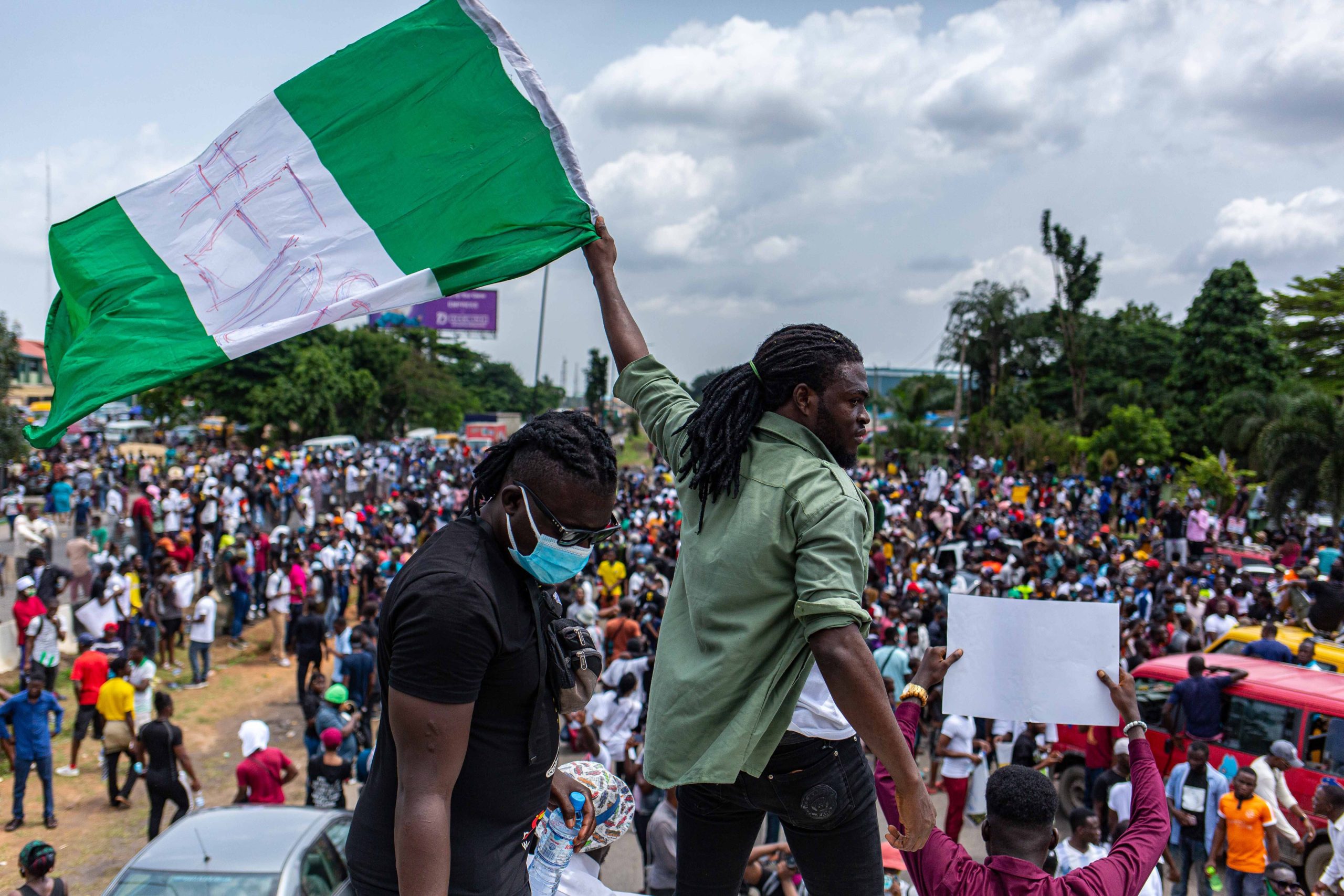
The #EndSARS movement originated from a public outrage ignited by a viral video of police brutality. While the immediate demand was to end the notorious Special Anti-Robbery Squad (SARS), the protests quickly evolved into a powerful symbol for a broader opposition to institutional oppression and bad governance. The movement’s success was rooted in its decentralized and leaderless structure, which made it resilient to co-option or demobilization. The protests were powered by a powerful wave of social media mobilization that garnered international solidarity and facilitated rapid information dissemination, garnering international attention. In a significant victory, the protests forced the federal government to dissolve SARS on October 11, 2020.
Following the protests, judicial panels of inquiry were established to investigate police brutality. The Lagos State panel’s leaked report was particularly damning, confirming that the Nigerian military and police had shot, injured, and killed unarmed protesters at the Lekki Toll Gate on October 20, 2020, and even described the incident as a “massacre”. It also found evidence of attempts to clean up the scene and cover up the actions. However, the government’s subsequent denial and limited action in response to these findings, including accepting only 11 of the panel’s 32 recommendations and controversially disputing the number of deaths, stands as a “painful reminder” of the institutional repression that activists continue to face.
4.2 The “Not Too Young To Run” Campaign
In contrast to the street-based activism of #EndSARS, the “Not Too Young To Run” campaign represents a triumph of legislative advocacy. Described as Nigeria’s “largest and most successful youth movement in recent times” , it successfully lobbied for a constitutional amendment that reduced the minimum age for a presidential candidate from 40 to 35, and for other legislative offices from 30 to 25. This landmark legal reform was hailed as a significant victory for youth political inclusion.
While a legislative triumph, the tangible impact of the Act on political representation remains modest. The data indicates a disparity between the legislative victory and the political reality. Although youth candidacy rose from 21% in the 2015 General Elections to 34.2% in 2019, youth representation in the legislature has seen only a slight increase. For example, in the 2023 elections, youth representation in the House of Representatives increased from 3% in 2019 to 3.92%, while in the State Houses of Assembly, it rose from 8.9% to 9.2%. This suggests that political change is not solely a function of legal reform. The real and enduring barriers lie in “money politics,” structural gatekeeping, and cultural biases, which the law could not solve and continue to undermine youth capacity to compete. The Act has opened a door, but the financial and cultural gatekeepers remain firmly in place.
4.3 The “Obidient Movement” and the 2023 Elections
The 2023 presidential election was a pivotal moment, described by INEC as a “youthful election” due to the unprecedented level of interest and turnout from the youth population. This was largely fueled by the “Obidient Movement,” a youth-led force that galvanized support for third-party candidate Peter Obi. The movement’s success was a direct consequence of its effective use of social media platforms like Twitter, Facebook, and WhatsApp to gather support and bypass traditional party structures. This mobilization effort drove a record 10 million new voter registrations, of which 84% were young people, the highest percentage in the nation’s history. The youth vote enabled Peter Obi to significantly challenge the dominance of the All Progressives Congress (APC) and the People’s Democratic Party (PDP) in their traditional strongholds, particularly in Lagos State. This demonstrates a clear causal relationship: the frustration and political consciousness fostered by the #EndSARS movement found a new, more formal outlet in the 2023 elections, highlighting a symbiotic relationship between street-level protest and electoral politics.
V. The Digital Revolution: Social Media and the New Political Landscape
Social media has not just been a tool for modern Nigerian activism; it has become the new political arena. The widespread adoption of digital platforms has fundamentally reshaped how young people engage with politics, democratizing communication and empowering individuals in unprecedented ways.
5.1 The New Political Arena
Social media has emerged as a crucial tool for youth political participation. Young people now use it to receive and share political information, mobilize for protests, and engage in civic education. The interactive nature of these platforms has made them a versatile tool for information dissemination and community building, enabling activists to bypass traditional media and government gatekeepers. In parallel, civic technology (“civic tech”) hubs such as “WeVote” and “ElectHER” have emerged, leveraging digital tools to promote voter participation, educate voters on the electoral process, and enhance transparency and accountability in governance. This new ecosystem has fundamentally changed the role of the individual in political communication, moving them from a passive information consumer to an active and influential contributor to the political discourse. This decentralization of political power, from a top-down to a bottom-up model, is one of the most significant changes in Nigeria’s modern political landscape.
5.2 The Power of Relatability
A key element of youth digital activism is the use of creative and often humorous content, such as social media skits. These skits have proven highly effective in simplifying complex political concepts and bridging the gap between political figures and young voters, fostering a sense of familiarity and trust. By presenting political figures in a relatable and socially friendly manner, these videos humanize politicians and make political discourse more accessible to a wider audience, particularly among the youth demographic. The viral nature of these skits allows for the exponential expansion of their reach, generating buzz and public opinion around a candidate or a cause.
5.3 The Dual-edged Sword
Despite its democratizing potential, social media presents significant drawbacks that temper its overall effectiveness. The research notes a notable concern among respondents that social media skits and other online content are often used to propagate misinformation, fake news, and propaganda about political parties and their candidates. A majority of respondents expressed concern that this content, due to its lack of detailed context, can lead to the trivialization of important political issues. This is a critical observation, as it demonstrates that while digital platforms can increase engagement, they also pose a risk of reducing nuanced debate to oversimplified, and often misleading, narratives. The “echo-chamber effect” can also exacerbate polarization, limiting genuine political discourse and potentially undermining the very unity that digital activism seeks to foster.
VI. The Enduring Obstacles to Youth Political Participation
Despite a rising tide of activism and landmark legislative victories, young Nigerians continue to face significant and deeply entrenched obstacles that impede their meaningful participation in formal politics. These barriers are not merely circumstantial but are structural and cultural, ensuring that power remains concentrated in the hands of a small, wealthy, and older elite.
6.1 The Financial Barrier: The Primacy of “Money Politics”
The most formidable barrier to youth political participation is “money politics,” a system where financial resources are the primary determinant of political success. The prohibitive cost of nomination forms—often priced in the millions of naira—systematically “shut out” young, aspiring leaders who lack the financial means to compete. This financial gatekeeping ensures that the political space is dominated by the wealthy and their “godfathers,” who leverage their deep financial networks to influence party processes and sponsor candidates. This system creates a distressing causal loop: the exorbitant cost of politics encourages corruption, as politicians are compelled to “recoup their investments through illicit means”. Furthermore, the financial barrier can drive frustrated youth to crime in an attempt to accumulate the wealth needed to enter the political system, creating a “revolving door for corruption” where the system itself perpetuates the very vices it purports to oppose.
6.2 Structural and Cultural Gatekeeping
Beyond the financial barriers, deep-seated structural and cultural biases perpetuate the exclusion of youth. Traditional Nigerian culture often favors elder leadership, dismissing youth voices as lacking the necessary experience to govern. This cultural bias, combined with a lack of effective mentorship and a political system that prioritizes financial status and party affiliation over merit, ensures that fresh perspectives and innovative ideas are systematically locked out of governance. Party structures, in this context, function as gatekeepers of elected offices, and party youth wings are often relegated to the roles of supporting older politicians’ campaigns rather than fielding their own candidates.
6.3 State Repression and its Consequences
The government’s use of brutal force, surveillance, and the criminalization of peaceful protests creates a “chilling effect” on youth activism. The constant pattern of institutional repression, including events like the Lekki Toll Gate incident and the suspension of Twitter in 2021, has contributed to a deep sense of institutional distrust and civic disengagement among young people. This explains the paradox of low voter turnout in the 2023 elections despite the record number of new voter registrations. While protests are a powerful expression of dissent, the sources suggest that when they are met with persistent state violence and a lack of tangible concessions, they can ultimately fail to “yield good governance in the long term”. This explains the paradoxical cycle of fervent activism followed by renewed civic disengagement.
Table 3: Obstacles to Youth Political Participation
| Obstacle Category | Specific Challenges | Implications for Youth Engagement |
| Financial | High cost of nomination forms and political campaigns | Systematically excludes young people, who lack the financial resources to compete with wealthy, established politicians. |
| Vote buying and “money politics” | Undercuts merit and integrity, forcing candidates to rely on financial heavyweights and perpetuating a corrupt system. | |
| Cultural | Bias toward elder leadership | Dismisses youth voices as inexperienced and lacking wisdom, leading to generational exclusion and marginalization. |
| Lack of mentorship programs | Hinders the development of political skills and networks for aspiring young leaders. | |
| Political | Institutional distrust and gatekeeping | Pushes youth away from formal political parties and towards unconventional, often short-lived, forms of activism. |
| Government repression of activism | Creates a chilling effect, leading to political apathy, disengagement, and a sense of futility. |
VII. Comparative Analysis: Nigerian Youth Activism in an African Context
The narrative of Nigerian youth activism is not an isolated one; it is part of a broader, continent-wide trend of rising youth political consciousness. By comparing the Nigerian experience with that of other African nations, particularly Kenya and South Africa, a clearer understanding of shared drivers and divergent outcomes emerges.
7.1 Shared Drivers and Commonalities
The core drivers of youth activism are remarkably consistent across Africa. High youth unemployment, institutional distrust, and a collective demand for better governance and accountability are common threads that motivate movements in countries as diverse as Nigeria, Kenya, South Africa, and Senegal. In all these nations, social media has played a central and transformative role, enabling decentralized and often “leaderless” protests that are difficult for governments to co-opt or demobilize. The protests are often characterized by organization by the masses rather than political parties, a central role for social media, and the dominant role played by youth. This reflects a fundamental change in how African youth perceive their civic role, a move away from the “politics of loyalties” (voting for parties) towards a “politics of choice” (direct action and issue-based movements).
7.2 Divergent Outcomes and Lessons
Despite these commonalities, the outcomes of youth movements have varied significantly, and the government’s response appears to be a critical differentiator. While Nigeria’s #EndSARS movement forced the disbanding of a police unit, the government’s subsequent denial and repression, particularly of the Lekki massacre findings, ultimately undermined public confidence and stalled deeper reforms. In contrast, Kenya’s Gen-Z protests, fueled by similar digital activism, successfully led to the withdrawal of a government bill. Similarly, South Africa’s “Fees Must Fall” campaign secured a concrete policy win by convincing the government to freeze tuition fees for a year. These examples suggest that while youth activism is a powerful force for disruption, the state’s willingness to engage with or repress these demands is a critical determinant of a movement’s long-term impact. The sustained denial of the Lekki massacre and the resistance to deeper reforms in Nigeria may have contributed to a shift in strategy from street-based protests to a more formal, electoral challenge, as seen with the “Obidient Movement.”
VIII. Recommendations for Sustainable Youth Inclusion
Fostering sustainable youth inclusion in Nigerian politics requires a multi-pronged approach that addresses both the legal and structural barriers identified in this analysis. The recommendations must move beyond symbolic gestures to create a genuinely enabling environment for youth participation.
8.1 Policy and Legislative Reforms
The government must acknowledge and address the systemic obstacles that undermine youth participation. A critical first step is to strictly enforce the existing provisions of the Electoral Act of 2022, which stipulate limitations on election expenses, and to mandate that political parties lower their exorbitant nomination form costs. This would help to dismantle the “highest bidder” system that systematically excludes those without financial means. Additionally, the implementation of a quota system that reserves a certain percentage of political positions for young people could serve as a “temporary fix” to address historical imbalances and provide a direct path for youth to gain governing experience. Nigeria could draw from Kenya’s approach, which mandates the inclusion of a youth representative in state-level human rights councils.
8.2 Fostering an Enabling Environment
Recommendations must extend beyond legal frameworks to create a political environment that encourages youth participation. The government should transition from viewing youth as “beneficiaries” of governance to “leaders of development”. This can be achieved by establishing and funding initiatives that strengthen youth capacity for political engagement through training, mentorship, and the promotion of leadership skills. A National Youth Development Fund could be established to provide grants to innovative, youth-led initiatives that focus on development, human rights, and advocacy. It is also essential for government institutions to build trust by upholding the rule of law and protecting the fundamental human rights of youth, ensuring that protests and expressions of dissent are not met with surveillance and brutal force.
8.3 A New Social Contract
For youth to transition from agitators to governance partners, they must leverage their digital mobilization power for sustained, long-term political engagement. The energy and momentum from online movements should be channeled into building political careers from the local government level upwards. This approach allows young leaders to gain valuable experience, build legitimacy, and effectively influence policy where it is most felt. Furthermore, youth must actively participate in formal political processes to ensure that their voices are not only heard in the streets but are also represented in the legislative and executive halls of power.
IX. Conclusion: The Unfolding Narrative
The narrative of Nigerian youth in politics is not a simple story of rising influence but a complex, ongoing struggle that will define the nation’s trajectory for generations to come. The analysis in this report confirms that Nigerian youth are a powerful, digitally-enabled, and increasingly influential force in the country’s political discourse. The paradox of their immense demographic power set against their persistent exclusion from formal power structures is the central tension that fuels their activism. The findings reveal a long-standing history of youth engagement that has evolved from organized, institutional movements to decentralized, issue-driven acts of principled rebellion.
While landmark achievements like the “Not Too Young To Run” Act and the record voter registration for the 2023 elections demonstrate the tangible impact of youth activism, the report also highlights the deep-seated obstacles that continue to impede meaningful progress. The pervasive influence of “money politics,” a political culture that favors elder leadership, and a history of state repression are enduring barriers that no single law or movement can fully dismantle. The future of Nigerian democracy hinges on the state’s willingness to address the root causes of youth disillusionment and to transition from a system of exclusion to one of genuine inclusion. The unfolding narrative of Nigerian youth in politics is an ongoing struggle, but it is one that has irrevocably shifted the nation’s political landscape and now holds the potential to build a more equitable and prosperous future.










Related Posts

Stay Informed With the Latest & Most Important News
Previous Post
Next Post


Advertisement