Now Reading: Nollywood: Nigeria’s Cinematic Powerhouse and Cultural Vanguard
-
01
Nollywood: Nigeria’s Cinematic Powerhouse and Cultural Vanguard

1. Introduction: Nollywood as a Global Cultural Phenomenon
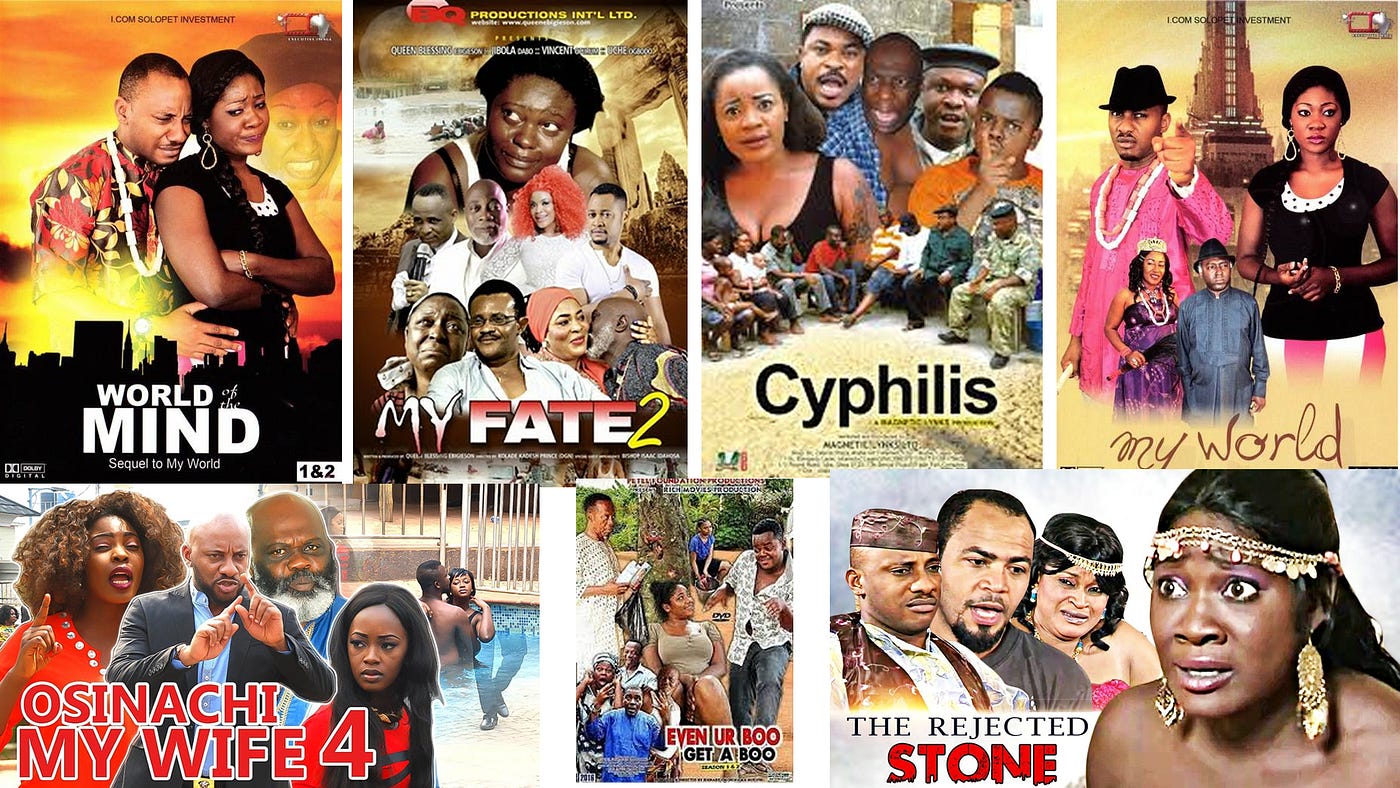
Nollywood, a portmanteau of “Nigeria” and “Hollywood,” stands as a formidable force in the global film landscape. This sobriquet, initially referring to the Nigerian film industry, gained prominence following a 2002 New York Times article by Matt Steinglass, though its precise origins remain a subject of discussion. The definition of what constitutes a Nollywood film has broadened over time, with Alex Eyengho defining it expansively as “the totality of activities taking place in the Nigerian film industry,” encompassing productions in over 300 Nigerian languages. Its influence has also extended to affiliated film industries, such as Ghanaian English-language cinema, often co-produced or distributed by Nigerian companies, and Nigerian/African diaspora films.
The very nomenclature “Nollywood” has invited critical discourse. Some argue that the term, originating from outside Nigeria, implies an imitation of Western cinema rather than an original African identity. This perspective suggests a deeper post-colonial struggle for cultural self-definition within a globalized media environment. The external coining of the term, coupled with its “Hollywood” suffix, inherently positions the industry in relation to a dominant Western cultural entity. This is not merely a semantic debate; it reflects a broader tension in post-colonial cultural production, highlighting the challenge of achieving global recognition without compromising indigenous identity. The discussion underscores the power dynamics inherent in global cultural discourse, where the act of naming can either affirm or diminish unique achievements.
Nollywood is globally recognized for its remarkable output volume, producing over 2,500 movies annually. This places it as the second-largest film industry worldwide by volume, surpassing Hollywood and trailing only slightly behind Bollywood. Despite this prodigious output, Nollywood’s revenues, estimated between $600 million and $7.2 billion annually, significantly lag behind those of Bollywood ($1.3 billion in 2023) and Hollywood ($9.8 billion in 2012). This disparity between its massive production volume and comparatively lower revenue points to fundamental structural impediments, primarily the informal nature of its operations and pervasive piracy. If an industry produces more films than nearly any other, a proportional revenue stream would typically be expected. The fact that this is not the case strongly indicates that the value generated by its creative output is not effectively captured and monetized through formal channels. This immediately highlights issues such as widespread piracy and the prevalence of informal distribution networks as critical systemic challenges, preventing full capitalization and equitable wealth distribution among industry stakeholders. Nevertheless, the industry is a significant economic force within Nigeria, contributing approximately 1.1% to 2.3% of the nation’s Gross Domestic Product (GDP) and employing over one million people, making it the largest employer after agriculture. Nollywood’s unique identity is further solidified by its indigenous development, largely independent of foreign financial influence, and its steadfast commitment to authentic African narratives.
2. Historical Trajectory: From Colonial Roots to Digital Dominance
The evolution of Nigerian cinema is a rich tapestry woven through distinct eras, each contributing to Nollywood’s current global stature.
The Colonial Era and Early Cinematic Efforts
The history of motion pictures in Nigeria extends back to the late 19th and early 20th centuries, with cinema arriving in Lagos as early as 1903. During this nascent period, film productions were predominantly overseen by white colonial and foreign filmmakers. A notable development was the establishment of the Crown Film Unit by British colonialists during World War II, which often produced films serving as propaganda. In a move towards “Africanizing” film production, the Nigerian Film Unit was established in 1949-1950, primarily focusing on documentaries and newsreels.
The Golden Age: Celluloid, Theatrical Roots, and Indigenous Filmmaking
The period from the late 1950s to the late 1980s is often referred to as the Golden Age of Nigerian cinema. This era commenced with the formal recognition of the Nigerian Film Unit in 1954, and the release of Fincho (1957) by Sam Zebba, the first film entirely copyrighted to this unit. Following Nigeria’s independence in 1960, the cinema business experienced rapid expansion, marked by the establishment of numerous new cinema houses. A pivotal moment for local participation was the 1972 Indigenization Decree, which mandated the transfer of ownership of approximately 300 film theaters from foreign proprietors to Nigerians. The oil boom of 1973-1978 further stimulated cinema culture, as improved economic conditions provided many citizens with disposable income for entertainment.
Nigerian content in theaters saw a gradual increase from the late 1960s into the 1970s, particularly productions from Western Nigeria. This surge was largely driven by former Yoruba traveling theatre practitioners, such as Hubert Ogunde, Moses Olaiya, and Ola Balogun, who transitioned their popular stage works to the celluloid format, becoming pioneering Nigerian filmmakers. This transition of Yoruba traveling theatre practitioners to filmmaking was a critical causal factor in shaping Nollywood’s distinctive narrative and aesthetic qualities, especially its emphasis on spiritual themes and dramatic storytelling. The Yoruba traveling theatre was a highly popular form of entertainment, and its practitioners were undeniably at the core of early video production. This direct lineage means that Nollywood’s unique elements, such as the prevalence of supernatural encounters and “juju” (traditional witchcraft and spirituality), are not accidental but deeply embedded cultural retentions from these indigenous theatrical forms. This causality explains why Nollywood feels distinctly African, rather than a mere copy of Western or Indian cinema. To further support the industry, the Nigerian Film Corporation (NFC) was established in 1979.
The Video Film Era: The “Living in Bondage” Revolution and Mass Production
The Nigerian film industry faced a significant decline in the 1980s, primarily due to factors such as the devaluation of Nigeria’s currency (the naira) and a scarcity of production equipment. In response, audiences gravitated towards a burgeoning Nigerian video film industry, which distributed films directly to television and sold VHS copies in local markets. The pivot from celluloid to video during this period was not merely a technological upgrade but a strategic, economically driven adaptation that enabled Nollywood’s rapid, high-volume growth. The economic constraints of the 1980s made expensive celluloid production unsustainable. The adoption of cheaper VHS technology was a pragmatic response, directly enabling the mass production and low-cost characteristics that became hallmarks of Nollywood. This demonstrates how economic adversity acted as a catalyst for technological innovation and a new production model, fundamentally shaping the industry’s trajectory.
The Igbo-language film Living in Bondage (1992), directed by Chris Obi Rapu and produced by Kenneth Nnebue, is widely acknowledged as the catalyst for the modern Nollywood era and the video film boom. This era was characterized by high-volume, low-budget productions, with film companies reportedly releasing four to five films daily to an estimated audience of fifteen million in Nigeria and five million in other African countries.
The New Nigerian Cinema: A Shift Towards Quality and Global Recognition
Beginning in the mid-2000s, government investment in Nigerian cinema and the emergence of modern movie theaters that prioritized higher production quality led to significant industry-wide changes. This period, frequently referred to as “New Nollywood,” marked a deliberate shift towards professional production values, showcasing talented Nigerian actors and developing more complex narratives. Hit films such as Kunle Afolayan’s
Irapada (2006) and Kemi Adetiba’s The Wedding Party (2016) achieved significant box office success and garnered international recognition.
The emergence of “New Nollywood” represents a strategic evolution from a quantity-driven, informal model to a quality- and formalization-focused approach, driven by both internal aspirations for artistic excellence and external pressures for global market integration. While the initial video era prioritized volume and accessibility , “New Nigerian Cinema” explicitly focused on enhancing artistic and technical quality. This shift is further evidenced by increased government investment and the demands of modern cinemas for higher standards. Furthermore, the pursuit of distribution deals with Western streaming services, which typically require more rigorous production standards and formal contracts, underscores a move towards a more sustainable and globally competitive industry, addressing the limitations of the earlier informal model. By 2013, this transformation had positioned the Nigerian film industry as the second-largest globally and the third most profitable, with a valuation of $5.1 billion. More recently, Nigerian films and TV shows have achieved broader global viewership through distribution agreements with Western streaming platforms.
Table 1: Key Eras of Nollywood Development
| Era Name | Approximate Time Period | Defining Characteristics | Key Milestones/Events | Key Figures (Representative) |
| Colonial Era | Late 19th C. – 1950s | Foreign oversight, propaganda films, establishment of Nigerian Film Unit | Motion pictures arrive (1903), Crown Film Unit (WWII), Nigerian Film Unit established (1949-50) | N/A (Foreign filmmakers) |
| Golden Age Era | Late 1950s – Late 1980s | Celluloid production, theatrical roots, indigenous filmmaking, government support | Nigerian Film Unit recognized (1954), Fincho (1957), Independence (1960), Indigenization Decree (1972), Oil Boom (1973-78), NFC established (1979) | Hubert Ogunde, Moses Olaiya, Ola Balogun, Eddie Ugbomah |
| Video Film Era | Early 1990s – Mid 2000s | Direct-to-video, VHS/DVD, low-cost, high-volume production | Decline of celluloid, Living in Bondage (1992) kickstarts boom, mass production | Chris Obi Rapu, Kenneth Nnebue |
| New Nigerian Cinema | Mid 2000s – Present | Professional production values, theatrical release, digital distribution, global recognition | Government investment, modern cinemas, Irapada (2006), The Wedding Party (2016), streaming deals | Kunle Afolayan, Kemi Adetiba, Geneviève Nnaji, Mo Abudu |
3. The Creative Landscape: Key Figures and Artistic Expression
The vibrant creative landscape of Nollywood is shaped by a diverse array of talented individuals and a distinctive artistic vision that resonates with audiences globally.
Pioneers and Visionaries of Nigerian Cinema
The foundational pillars of Nigerian cinema were laid by early practitioners who transitioned from the stage to the screen. Figures such as Chief Hubert Ogunde, Chief Amata, Baba Sala (Moses Olaiya), Ade Love (Adeyemi Afolayan), and Eddie Ugbomah were instrumental in theatrical and celluloid endeavors both before and after Nigeria’s independence. Ola Balogun is notable for directing
Ajani Ogun (1977), considered the first Yoruba film, which subsequently led to a proliferation of Yoruba-language films adapted from traditional plays. The commercial viability of video films was underscored by Jimi Odumosu’s 1983 horror film
Evil Encounter, which was released directly to television. The modern video film era, which redefined the industry, is largely attributed to Kenneth Nnebue (producer/actor) and Chris Obi Rapu (director) for their seminal Igbo-language film
Living in Bondage (1992).
Influential Actors, Directors, and Producers Shaping Modern Nollywood
Contemporary Nollywood boasts a cadre of megastars and influential figures who have significantly shaped its trajectory and global appeal. Actors like Ramsey Nouah, Geneviève Nnaji, Omotola Jalade Ekeinde, and Funke Akindele, alongside producers and directors such as Mo Abudu, Richard Mofe-Damijo, and Kunle Afolayan, wield considerable influence over popular culture and have achieved international acclaim. Geneviève Nnaji’s directorial debut,
Lionheart (2018), notably became Nigeria’s first Netflix Original film, paving the way for other Nigerian filmmakers to access broader international distribution platforms. Kunle Afolayan’s works, including
The Figurine (2009) and October 1 (2014), have garnered critical acclaim for their high-quality storytelling and technical excellence, effectively raising the bar for African filmmaking. Funke Akindele has set new box office records with films like
A Tribe Called Judah (2023) and Everybody Loves Jenifa (2024), underscoring the commercial viability and appeal of serial content within the industry. Furthermore, Nigerian filmmaker Frank Rajah Arase played a crucial role in integrating Ghanaian actors such as Van Vicker, Jackie Appiah, and Majid Michel into mainstream Nollywood, thereby expanding the industry’s regional appeal and talent pool.
The rise of prominent female figures like Geneviève Nnaji, Omotola Jalade Ekeinde, Mo Abudu, and Funke Akindele signifies a crucial internal shift within Nollywood, demonstrating increasing agency and influence for women in what has been a traditionally patriarchal industry, and challenging conventional societal roles. While some research indicates that Nollywood films have historically portrayed women in dependent or stereotypical roles , the emergence of these powerful female actors, directors, and producers, who are not only successful but also actively “inspiring women to pursue careers” and “championing diversity,” presents a compelling counter-narrative. This suggests that the industry, despite its reflections of societal patriarchy, is also a dynamic space for challenging and evolving gender norms through the visibility and success of its female creatives.
Common Genres, Recurring Themes, and Distinctive Production Styles
Nollywood is predominantly known for its comedies and dramas, but the industry is actively diversifying its genre offerings to include horror, historical dramas, musicals, and animations, often with improved picture and sound quality. Common thematic explorations in Nollywood films include love and relationships, family and community dynamics, social justice and corruption, cultural heritage and identity, and economic struggles and poverty. These themes are frequently intertwined, providing complex and nuanced narratives that mirror the realities of Nigerian life.
A crucial defining feature that distinguishes Nigerian cinema among global film cultures is its pervasive spiritual theme. Films frequently depict supernatural encounters and the use of “juju,” an umbrella term for traditional witchcraft and spirituality. This consistency is deeply rooted in a non-Western African ontology, which perceives the world as consisting of interacting forces of cosmological scale rather than discrete, secularized objects. The enduring prominence of spiritual themes and “juju” in Nollywood films highlights a deep cultural resonance that distinguishes it from Western and even some other global cinemas, suggesting a unique African ontological perspective embedded in its storytelling. This is more than a mere genre choice; it represents a fundamental worldview that informs the narratives. This makes Nollywood not just “Nigerian” but distinctly “African” in its cinematic language, offering a counter-narrative to secularized Western storytelling and providing a unique value proposition in the global film market.
The visual style of Nollywood films is characterized by a distinct aesthetic that reflects Nigeria’s cultural and social context. It is often influenced by Nigerian cultural traditions, evident in the use of vibrant colors and patterns reminiscent of traditional textiles and clothing. Cinematography often employs handheld cameras, close-ups, and medium shots to create a sense of intimacy and immediacy, drawing the viewer into the story. While earlier Nollywood films tended to focus on traditional cultural practices and values, more recent productions increasingly explore contemporary issues such as corruption and social justice, reflecting the evolving Nigerian society.
4. Production, Distribution, and Exhibition Models: Evolution and Innovation
Nollywood’s operational framework has undergone significant evolution, transitioning from largely informal origins to increasing integration with digital platforms, though persistent challenges remain.
The Informal Economy: Low-Cost Production and Marketer-Driven Distribution
Nollywood films are renowned for their rapid and cost-effective production. On average, a movie can be produced within a month, with costs ranging from $25,000 to $70,000 per film, a stark contrast to the $250 million typically spent on a top Hollywood production. Historically, the industry’s structure has been highly informal, characterized by cash transactions and oral agreements, with little to no formal documentation. A cartel of Nigerian film marketers has traditionally exerted considerable control over financing, production, and distribution, primarily through home video rentals and sales, which served as the main revenue stream.
Nollywood’s informal production and distribution model, while initially a pragmatic response to economic constraints and a driver of its high volume, has become a significant barrier to formal investment, international collaboration, and equitable revenue generation. The low-cost, rapid production model was initially enabled by this informality. However, this same informality directly leads to a lack of documentation, no transparent accounting systems, and weak enforcement mechanisms for copyright. These factors, in turn, deter international co-productions and lucrative investment opportunities, as foreign markets often require a “chain of title” or proof of ownership rights. This creates a clear cause-and-effect relationship: the very mechanism that facilitated Nollywood’s early growth now limits its mature economic potential and ability to attract formal capital.
The Challenge of Piracy and its Impact on Revenue
Rampant piracy remains one of the most significant impediments to Nollywood’s economic growth, with estimated annual losses exceeding $1 billion. It is estimated that for every legitimate copy sold, nine others are pirated. Paradoxically, piracy played a role in Nollywood’s early global expansion. Complex international piracy networks emerged as an early byproduct of the informal distribution structure, inadvertently helping Nollywood films gain foreign audience attention and establish a global following through illicit trade. Piracy’s paradoxical role—initially facilitating global reach while simultaneously crippling legitimate revenue streams—reveals the complex, often unintended consequences of informal market dynamics in a globalized media environment. The primary function of distribution is to deliver content to audiences. In Nollywood’s formative years, in the absence of formal international channels, illicit piracy networks filled this void, inadvertently exposing films to a global diaspora. This “unintended distribution” helped establish Nollywood’s cultural footprint. However, this same mechanism directly undermines the industry’s ability to formalize and profit legitimately, leading to massive revenue losses. This highlights a critical challenge for emerging industries: how to transition from organic, informal growth to sustainable, formalized economic models when the informal pathways have become deeply entrenched. This widespread illicit trade severely limits international returns for creators and significantly reduces tax revenue for the Nigerian government.
Emerging Digital Platforms and Formalization Efforts
The landscape of Nollywood’s distribution and exhibition is undergoing a transformative shift, driven by the proliferation of digital technology, increased internet access, and widespread smartphone use. This digital revolution is fueling a production boom and opening up crucial new distribution channels. Online streaming platforms, such as iROKOtv, have become pivotal. iROKOtv, claiming to be the world’s largest online distributor of African content, boasts a catalog of 5,000 Nollywood films and reports a global audience of 6 million across 178 countries, paying filmmakers for streaming rights.
Nigerian filmmakers are increasingly leveraging platforms like YouTube as an alternative distribution channel, enabling them to reach audiences quickly without the traditional barriers of subscription fees or limited cinema locations. Notable examples include Ruth Kadiri and Kunle Afolayan, who have successfully utilized YouTube for their content. Furthermore, global streaming giant Netflix has entered the market, with films like Geneviève Nnaji’s
Lionheart becoming Netflix Originals, thereby providing broader international distribution and validation.
The shift towards digital distribution and streaming platforms is orchestrating a “creative destruction” of legacy informal distribution norms, fundamentally altering power dynamics within the industry and offering a pathway to overcome historical barriers to formal capitalization. Historically, film marketers held significant power due to their control over informal distribution networks. Digital platforms, by providing direct access to global audiences and establishing formalized payment structures, bypass these traditional gatekeepers. This “shift in power” implies that filmmakers can potentially gain greater control over their content and revenue streams, reducing their reliance on informal networks that fostered piracy and limited legitimate returns. This represents a transformative force for the industry’s economic future.
Governmental and institutional support is also playing a crucial role in formalization efforts. Initiatives include the World Bank’s Growth and Employment in States (GEMS) project, which provided $20 million, and the Nigerian Government’s Project ACT-Nollywood, which pledged a $200 million loan and a $17-18 million grant to aid sector growth, boost employment, and support training and skills acquisition. Efforts are also underway to strengthen intellectual property rights and combat piracy, with the Nigerian Copyright Commission (NCC) actively stepping up enforcement measures.
The Role of Traditional Cinemas and New Exhibition Avenues
While the majority of Nollywood films were initially produced for non-theatrical release, primarily for home video consumption, there is a discernible trend towards increased cinema exhibition, particularly with the advent of the “New Nigerian Cinema”. Modern movie theaters are emerging across Nigeria, and government initiatives are actively encouraging the establishment of community cinemas to broaden access and revenue generation. Furthermore, the projected increase in pay-TV penetration is expected to provide additional revenue streams for producers through content purchases or commissioned productions.
5. The Multifaceted Impact of Nollywood
Nollywood’s influence extends far beyond mere entertainment, encompassing profound cultural, economic, and social impacts both within Nigeria and across the African diaspora.
5.1. Cultural Significance and Global Reach
Nollywood serves as a powerful cultural ambassador for Nigeria and, by extension, the entire African continent. Its films frequently showcase Nigeria’s rich customs, traditions, and local languages, thereby contributing significantly to cultural preservation and offering a more holistic and accurate portrayal of Africa, in stark contrast to often negative Western mainstream media depictions.
The industry’s influence resonates deeply within the African diaspora and among global audiences. Nigerian films command a large following among African emigrants worldwide, with over 30 million viewers globally. These films provide a vital window into African culture and experiences, actively challenging stereotypes and fostering greater understanding across diverse communities. Nollywood has also inspired the emergence of similar film industries across the continent, such as Ghallywood in Ghana and Riverwood in Kenya. The widespread cultural influence of Nollywood across Africa and the diaspora, including inspiring local cultural shifts and fostering regional film industries, demonstrates its significant “soft power” and its role in shaping a pan-African cultural identity. Anecdotes such as Zambian children adopting Nigerian accents from watching Nollywood films, or Ivorian rebels reportedly pausing fighting to watch new releases, illustrate a profound, almost subconscious, cultural penetration. This impact transcends simple consumption, extending to active assimilation and influence on daily life and even political behavior. Furthermore, its inspiration for “Ghallywood” and “Riverwood” demonstrates its capacity to catalyze similar cultural industries, effectively exporting a model of self-representation and fostering a shared African cinematic identity. This is a clear manifestation of cultural soft power.
5.2. Economic Contributions and Employment
Nollywood stands as Nigeria’s largest employer after agriculture, providing direct and indirect jobs for over one million people. Its contribution to Nigeria’s GDP is substantial; a 2014 rebasing exercise revealed the film industry contributed approximately 1.42% to the nation’s GDP, a figure that increased to 2.3% by 2016, equating to about ₦239 billion (approximately $660 million).
The industry generates significant revenue, averaging between $600 million and $7.2 billion annually, with a substantial portion of these receipts originating from the African diaspora. Foreign investment has also been attracted, exemplified by the $8 million investment from U.S.-based hedge fund Tiger Global Management and Swedish investment firm Kinnevik into iROKOtv. Government and international bodies, including the World Bank and the Nigerian Government, have also provided substantial funding to support the sector.
Despite its significant economic contributions to GDP and employment, the relatively low income for many Nollywood actors and the massive revenue loss due to piracy reveal a fundamental challenge in value capture and equitable distribution within the industry. The statistics on GDP contribution and employment clearly demonstrate Nollywood’s macro-economic importance. However, when juxtaposed with the fact that even popular actors earn relatively low amounts (between $1,000 and $3,000 per film) and the estimated $1 billion annual loss to piracy, a critical disconnect becomes apparent. This suggests that the economic value generated by the industry is not effectively flowing back to its creators or being fully captured within the formal economy, implying a structural inefficiency and a pressing need for greater formalization and intellectual property protection to ensure sustainable and equitable growth.
Table 2: Nollywood’s Economic Contributions (Selected Statistics)
| Metric | Value | Source/Year |
| Annual Revenue (Average) | $600 million – $7.2 billion | |
| GDP Contribution (2014) | 1.42% | |
| GDP Contribution (2016) | 2.3% (approx. $660 million) | |
| Employment | Over 1 million people | |
| Average Production Cost per Film | $25,000 – $70,000 | |
| Estimated Annual Piracy Loss | Over $1 billion |
5.3. Social Influence and Narrative Shaping
Nollywood serves as a potent instrument for social change, actively addressing critical social issues such as gender equality, poverty, education, and health through its compelling narratives. These films not only mirror the realities of Nigerian society but also inspire audiences to engage in critical thinking and potentially prompt action. Films effectively portray the culture and values of the Nigerian people and function as channels for social mobilization, showcasing the political and economic landscape.
Nollywood functions as a dynamic social mirror, reflecting the complexities and challenges of Nigerian society, while simultaneously acting as a potential catalyst for social dialogue and change, particularly concerning gender roles and societal norms. The films explicitly “reflect the realities of Nigerian society” and address “critical social issues”. While some research indicates the perpetuation of patriarchal portrayals of women in certain films, the concurrent rise and significant influence of powerful female figures like Funke Akindele and Geneviève Nnaji present a counter-narrative. These women are not only successful but also challenge traditional views on working wives and empower other women to pursue careers. This suggests that Nollywood is not a static reflection but an active participant in societal discourse, capable of both reinforcing existing structures and challenging them, thereby influencing “societal attitudes and values”. This dual capacity makes it a crucial site for understanding and potentially shaping social evolution in Nigeria.
6. Challenges and Opportunities: Navigating the Future
Nollywood, despite its remarkable achievements and growth, faces a complex interplay of persistent challenges alongside promising opportunities for future development and global integration.
Persistent Challenges: Piracy, Funding, Infrastructure, and Formalization
Piracy remains the most formidable obstacle, leading to substantial revenue losses exceeding $1 billion annually and significantly deterring international investment and co-productions. The ubiquity of social media has further exacerbated the issue, facilitating the rampant spread of pirated content.
Funding and Infrastructure deficiencies continue to impede the industry’s ability to produce high-quality films. Limited budgets are common, impacting overall production quality. Furthermore, a lack of basic infrastructure, such as a consistent supply of electricity and reliable power grids, poses significant operational challenges.
The historical reliance on an informal structure, characterized by oral agreements and cash transactions, creates ongoing issues related to intellectual property rights, transparent accounting, and access to formal capital. This inherent precarity significantly affects creative labor within the industry. While production quality has been improving, it historically suffered from a lack of capital investment, and this remains a challenge for achieving consistent global competitiveness. Moreover,
limited international market penetration, due to restricted promotion and distribution channels, continues to constrain Nollywood’s global influence.
The interconnectedness of piracy, informality, and funding challenges creates a vicious cycle that hinders Nollywood’s full economic potential, transforming its initial adaptive strengths into current systemic weaknesses. The low-cost, rapid production model was initially enabled by informality. However, this informality directly leads to weak intellectual property enforcement and rampant piracy , which in turn causes massive revenue losses. These losses, coupled with the lack of formal documentation, deter legitimate investment and international co-productions. This creates a self-perpetuating problem where the industry struggles to formalize and attract the capital needed to improve quality and overcome its challenges, despite its immense cultural output.
Future Opportunities: Digital Growth, International Collaborations, and Policy Support
Nollywood is poised for significant growth, driven by several emerging opportunities. The rise of digital platforms such as Netflix, YouTube, and iROKOtv offers substantial potential for global reach, new revenue streams, and bypassing traditional distribution barriers.
There is an increasing global interest in African culture, fueled in part by the growing influence of African diasporic communities, which creates an expanding audience for Nollywood films. This growing demand for diverse content presents a significant opening.
International collaborations with other film industries can lead to improved production quality, valuable learning opportunities, and expanded global influence. Such partnerships can facilitate knowledge exchange and access to new markets.
Governmental and institutional support continues to be a vital opportunity. The Nigerian government and organizations like the World Bank are providing funding, training programs, and initiatives aimed at strengthening intellectual property rights and fostering industry development. Specific plans include establishing scriptwriting labs and promoting community cinemas.
Technological advancements, including artificial intelligence (AI), smartphone filmmaking, and improved camera and editing software, offer affordable avenues for creating high-quality content and experimenting with innovative narratives. Furthermore, the impacts of the COVID-19 pandemic have inadvertently pushed industry players towards adopting more formalized industrial structures and practices, which could address historical informality.
The convergence of digital distribution, increasing global demand for diverse content, and growing governmental/institutional support presents a critical window for Nollywood to transition from an informal, volume-driven model to a formalized, quality-focused, and globally competitive industry. The long-standing challenges of piracy and informality are being met by the simultaneous rise of legitimate digital platforms, coupled with a global appetite for non-Western narratives. When combined with targeted government funding and intellectual property protection efforts, this confluence provides the necessary conditions for Nollywood to overcome its historical limitations. This implies a strategic opportunity for a significant evolution, moving beyond its “DIY” origins towards a more structured and profitable future.
Table 4: Key Challenges and Opportunities Facing Nollywood
| Category | Specific Aspect | Description |
| Challenges | Piracy | Massive revenue losses (>$1B annually), deters international investment, exacerbated by social media. |
| Funding & Infrastructure | Limited budgets, inadequate infrastructure (e.g., electricity), impacts production quality. | |
| Informal Structure | Reliance on oral agreements, cash transactions, leads to IP issues, lack of transparent accounting, limited access to formal capital. | |
| Production Quality | Historically low quality due to budget constraints, improving but still a challenge for global competitiveness. | |
| Limited International Market Penetration | Restricted promotion and distribution channels globally. | |
| Opportunities | Digital Platforms | Streaming services (Netflix, YouTube, iROKOtv) offer global reach, new revenue, bypass traditional barriers. |
| Increasing Global Interest | Growing global demand for African culture and diverse narratives. | |
| International Collaborations | Partnerships can improve quality, facilitate knowledge exchange, expand global influence. | |
| Government & Institutional Support | Funding, training, IP protection initiatives from government and World Bank. | |
| Technological Advancements | AI, smartphone filmmaking, improved equipment offer cost-effective quality and new creative avenues. | |
| Formalization of Practices | Pandemic-induced shift towards more structured industrial practices. |
Export to Sheets
7. Nollywood in the Global Context: A Comparative Analysis
Nollywood occupies a distinctive position within the global film industry, marked by unique characteristics that set it apart from established powerhouses like Hollywood and Bollywood.
Nollywood vs. Bollywood vs. Hollywood: Output, Revenue, and Artistic Approaches
Quantitatively, Nollywood is a prolific producer, releasing over 2,500 films annually. This volume often surpasses that of Bollywood, which produced 1,813 films in 2019, and significantly outpaces Hollywood, which produces hundreds of films per year. However, this high output does not translate proportionally into revenue. Nollywood’s annual revenue, ranging from $600 million to $7.2 billion, significantly trails Bollywood’s $1.3 billion (in 2023) and Hollywood’s $9.8 billion (in 2012). The stark quantitative differences (volume versus revenue) between Nollywood and its global counterparts underscore that its success cannot be measured solely by traditional economic metrics, but must also account for its unique informal economy and profound cultural impact. Comparing Nollywood’s output (second largest globally) with its significantly lower revenue against Hollywood and Bollywood immediately highlights a non-standard economic model. This implies that the industry’s value proposition extends beyond direct box office or formal sales, encompassing its role as a cultural phenomenon, a significant source of employment within an informal economy, and a powerful tool for cultural soft power. It challenges the conventional Western-centric view of what constitutes a “successful” film industry.
In terms of production, Nollywood films are characterized by low costs, typically ranging from $25,000 to $70,000, and rapid production schedules, often completed within a month. In contrast, Hollywood productions are high-budget, averaging $6 million to $7 million per film, with longer production times of around one year. Thematic focus in Nollywood primarily revolves around drama, social and political issues, family dynamics, relationships, love, history, and spirituality. While improving, Nollywood films have historically been associated with lower technical quality compared to Western productions. Hollywood films span a vast array of genres and themes with high production quality and extensive use of special effects, while Bollywood is renowned for its musicals and diverse narratives.
Distribution and exhibition models also differ significantly. Nollywood has historically relied on home video sales (VHS, DVDs) and is increasingly leveraging streaming platforms. Hollywood, conversely, primarily utilizes theatrical releases globally, complemented by extensive franchising and licensing deals.
Nollywood’s Unique Position in Global Media Flows
Nollywood’s trajectory is distinct; its development was largely indigenous, evolving organically within Nigeria without the significant immigrant influence that shaped Hollywood. It represents an “alternative, organically driven, bottom-up kind of, ad hoc, development impulse” in the global media landscape. Its focus on authentic African content and its ability to genuinely articulate the African experience resonate deeply with audiences, accounting for its widespread global embrace. Nollywood’s model and message have expanded beyond Africa, reaching audiences in Europe, North America, and the Caribbean, with diaspora films becoming an integral part of the industry. It is widely regarded as Africa’s most compelling cultural resource, overshadowing other African movie industries and serving as an effective instrument of soft power.
Nollywood’s unique trajectory as an indigenous, “bottom-up” industry, largely independent of foreign capital influence on its artistic imagination, positions it as a significant case study for understanding alternative models of cultural production and distribution in the Global South. Unlike many post-colonial film industries that relied heavily on state subsidies or international aid, Nollywood developed organically from local entrepreneurship and informal networks. This “financially viable, popular” model contrasts sharply with the often state-subsidized or heavily commercialized models seen elsewhere. This independence has allowed Nollywood to maintain a distinct “African ontology” and tell stories on its own terms, making it a powerful example of cultural self-determination and resilience in a globalized world dominated by Western media.
Table 3: Comparative Overview of Global Film Industries (Nollywood, Bollywood, Hollywood)
| Industry Name | Annual Film Output (approx.) | Average Production Cost (approx.) | Global Box Office Revenue (approx.) | Primary Distribution Model | Key Thematic/Style Focus | Unique Characteristic |
| Nollywood | >2,500 films | $25,000 – $70,000 | $600M – $7.2B | Home video, growing streaming | Drama, comedy, social issues, family, spirituality/juju | High volume, low cost, indigenous, informal origins, strong cultural resonance |
| Bollywood | ~1,800 films | Variable (often higher than Nollywood) | ~$1.3B (2023) | Theatrical, home video, streaming | Musicals, romance, family drama, action | Largest by tickets sold, strong musical elements, regional diversity |
| Hollywood | Hundreds of films | $6M – $7M (average) | ~$9.8B (2012) | Theatrical, extensive franchising, streaming | Diverse genres, global appeal, high production values, special effects | Global dominance, large budgets, advanced technology, immigrant influence in origins |
Export to Sheets
8. Conclusion: The Enduring Legacy of Nigeria’s Movie Temple
Nollywood’s journey from its colonial cinematic roots and indigenous theatrical traditions to its current status as a global film powerhouse is a testament to its remarkable adaptability and entrepreneurial spirit. The industry’s evolution, particularly its strategic pivot to video in response to economic challenges, fundamentally shaped its high-volume production model. This unique identity is deeply rooted in authentic indigenous narratives, pervasive spiritual themes, and a distinct aesthetic that resonates across Africa and its diaspora.
The profound cultural, economic, and social impact of Nollywood cannot be overstated. It serves as a powerful cultural ambassador, preserving African narratives and challenging stereotypes, while simultaneously acting as a significant employer and contributing substantially to Nigeria’s GDP. However, the analysis reveals a paradox at the heart of its success: its immense volume and cultural reach are often undermined by persistent challenges stemming from its informal structure and rampant piracy. These factors hinder the full economic capitalization of the industry and result in an inequitable distribution of value, particularly for its creators.
Nollywood’s future trajectory hinges on its ability to strategically balance its foundational strengths (indigenous storytelling, high volume, entrepreneurial spirit) with a concerted effort towards formalization, quality enhancement, and effective intellectual property protection, thereby unlocking its full, equitable economic potential. The report has consistently highlighted that Nollywood’s growth was driven by its informal, high-volume model, which concurrently created its biggest challenges, such as piracy and limited revenue capture. The pathway forward is not about abandoning its roots but about evolving its operational framework. By formalizing its practices (including intellectual property rights, contracts, and transparent accounting), investing in enhanced quality (across production, technical infrastructure, and script development), and strategically leveraging legitimate digital channels, Nollywood can retain its cultural authenticity and prolific output. This strategic evolution will enable the industry to finally translate its immense cultural value into commensurate economic returns for all stakeholders, representing the ultimate challenge and opportunity for this “Nigerian movie temple.”
Future Outlook and Recommendations for Sustainable Growth
To ensure Nollywood’s continued growth and global prominence, several key recommendations are critical:
- Leveraging Digital Platforms: Continued strategic engagement with streaming services, including Netflix, YouTube, and iROKOtv, is paramount. This will help formalize distribution channels, effectively combat piracy by offering legitimate alternatives, and provide consistent access to global audiences and legitimate revenue streams.
- Investment in Quality and Training: Increased investment in production quality, technical infrastructure, and script development is essential to enhance global competitiveness and attract higher-value international collaborations. Establishing and expanding professional training programs, such as scriptwriting labs, will cultivate a new generation of skilled filmmakers.
- Strengthening Intellectual Property Rights: Robust legal frameworks and diligent enforcement mechanisms are urgently needed to combat piracy effectively. This will ensure that creators receive fair returns on their work, incentivizing further investment and innovation within the industry.
- Policy Support and Formalization: Continued governmental and institutional support, including targeted funding, tax incentives, and initiatives like the establishment of community cinemas, will incentivize the formalization of the industry. This will foster greater transparency, attract both domestic and international investment, and create a more stable operating environment.
- Cultivating Diverse Narratives: The industry should continue to explore and produce diverse genres and themes while steadfastly preserving the authentic African voice and unique cultural elements that define Nollywood’s distinctive appeal and resonance.
- Global Collaborations: Actively fostering more international co-productions and partnerships will facilitate knowledge exchange, provide access to new markets, and further elevate Nollywood’s global standing and artistic reach.










Related Posts

Stay Informed With the Latest & Most Important News
Previous Post
Next Post
Advertisement