Now Reading: A Comprehensive Analysis of Ethnic Groups, Culture, and Politics in Nigeria
-
01
A Comprehensive Analysis of Ethnic Groups, Culture, and Politics in Nigeria

I. Introduction: The Foundations of a Multi-Ethnic State
1.1. Executive Summary
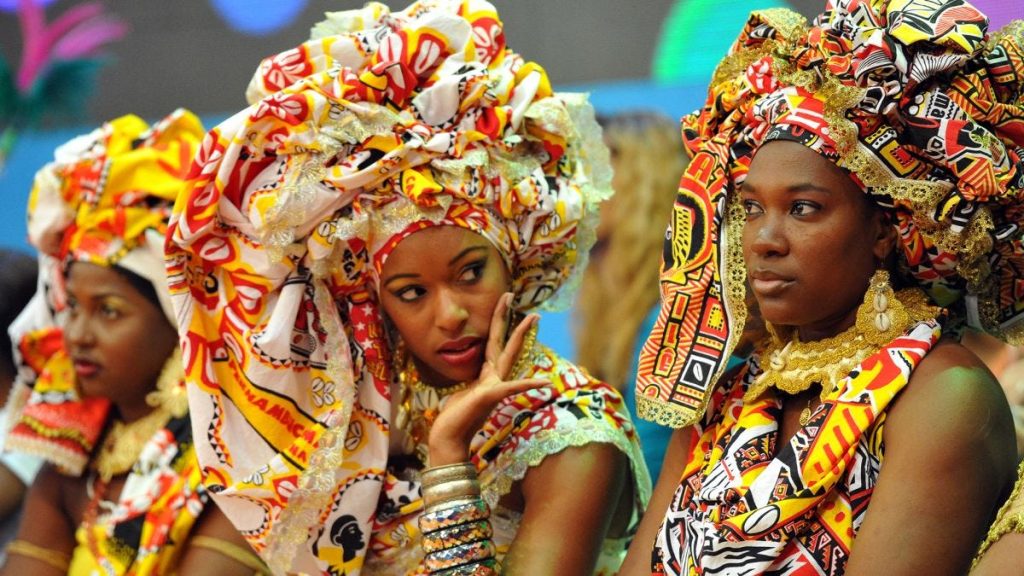
Nigeria stands as a paradigm of a multi-ethnic state, a complex mosaic of over 250 distinct ethnic groups and more than 500 languages. The nation’s identity is frequently—and often reductively—summarized by its three largest ethnic blocs: the Hausa-Fulani, predominantly situated in the north; the Yoruba, concentrated in the southwest; and the Igbo, occupying the southeast. These three groups, who represent approximately 70% of the population, have historically shaped Nigeria’s socio-political landscape and economic narrative.
This report moves beyond this simplified tripartite view to provide a detailed examination of Nigeria’s diverse ethnic composition. It offers a thorough profile of the major groups, analyzing their unique histories, social structures, and economic activities, while also giving voice to the significant, yet often overlooked, minority groups found throughout the country. The analysis then transitions to an exploration of how ethnic identity has fundamentally influenced Nigeria’s political development, from its colonial origins and the tragic Nigerian Civil War to the persistent challenges of federalism and power-sharing. This report will demonstrate that the nation’s political stability is inextricably linked to its ability to manage its deep-seated ethnic and regional fragmentation.
1.2. Nigeria’s Ethnic Mosaic: Beyond the Tripartite View
The narrative of Nigeria as a nation of three dominant ethnic groups is a pervasive simplification that fails to capture the intricate reality of its cultural and demographic landscape. While the Hausa-Fulani, Yoruba, and Igbo are indeed the largest groups, accounting for roughly two-thirds of the total population, the country is home to over 400 ethnic groups and more than 500 languages, seven of which are now extinct. This diversity is not merely a statistical fact; it is a fundamental aspect of the Nigerian experience, with numerous other groups having populations exceeding one million people, including the Kanuri, Tiv, Ibibio, and Ijaw.
The classification of Nigerian society into a few major blocs is not just a matter of convenience; it has significant political implications. The disproportionate focus on the “big three” has historically marginalized the voices of countless other communities, contributing to a sense of inequality and a deep-seated feeling of being an “oil minority” or a “disadvantaged group” in a national context. This dynamic has created a fertile ground for social crises and political instability, where ethnic loyalties often supersede national interests. For a nation to achieve genuine national cohesion, it must move beyond this reductionist framework and formally recognize the identity and rights of its numerous ethnic groups.
Furthermore, the very nature of these ethnic identities is not static. A close examination reveals that they are in many cases fluid, historical constructs rather than immutable categories. For instance, the Yoruba identity did not always denote an ethnicity but was originally used to define speakers of the Yoruba language. The term was solidified as an ethnic label through its extensive use in the Hausa language and subsequent Arabic and European ethnographies. Similarly, the Hausa-Fulani identity is a direct result of centuries of cultural and even genetic assimilation, where migrating Fulani peoples adopted the Hausa language and culture, with some even becoming a ruling class over the Hausa. This demonstrates that the dominant ethnic groups in Nigeria are themselves products of historical convergence and power consolidation, a process that continues to influence modern inter-group dynamics.
1.3. Scope and Methodology
This report serves as an authoritative reference document, providing a comprehensive analysis of Nigeria’s ethnic groups. It aims to inform academic, governmental, and institutional professionals by synthesizing a wide array of information. The methodology is qualitative and relies on a multi-source synthesis of the provided materials. The analysis is structured to first establish the foundational cultural and historical profiles of the major and significant minority groups, then to connect these foundational elements to the broader political history of the Nigerian state. This approach allows for the identification and exploration of underlying themes, causal relationships, and the inherent contradictions within Nigeria’s efforts to manage its diversity.
II. The Principal Ethnic Groups: Historical and Cultural Dominance
2.1. The Hausa-Fulani: A Convergence of Culture and Power
2.1.1. Historical Assimilation and Geographic Distribution
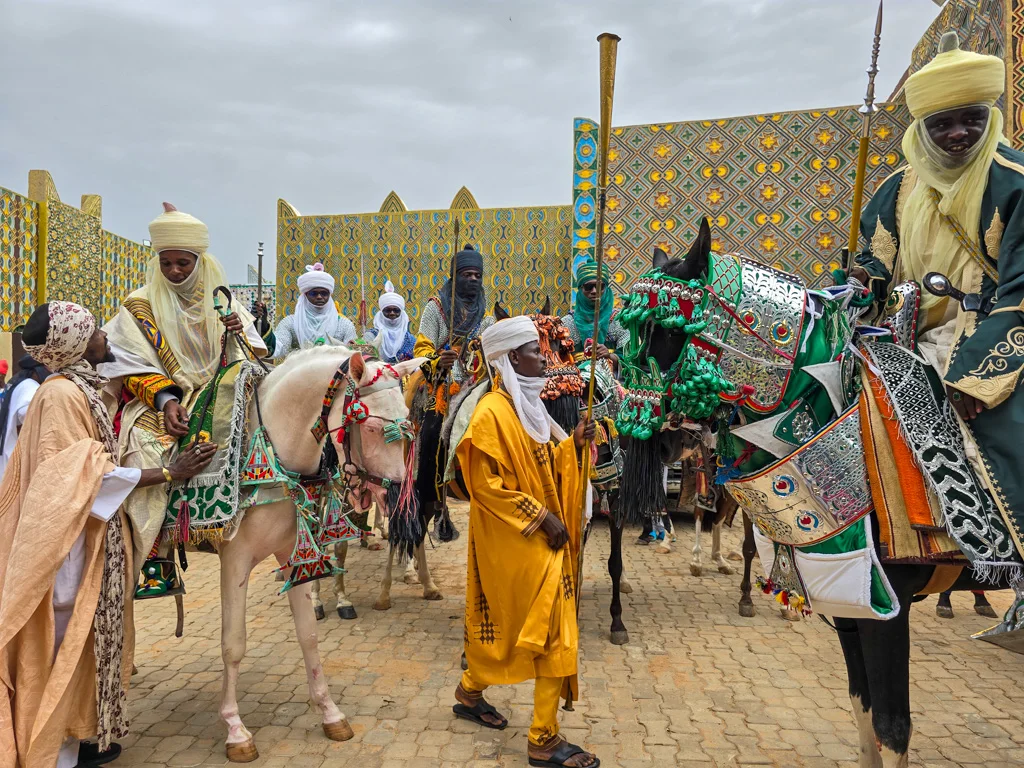
The Hausa-Fulani are the largest ethnic bloc in Nigeria, residing primarily in the northern part of the country. They are a demographic and political force whose identity is a product of a centuries-long process of cultural assimilation. The nomadic Fulani migrated into Hausaland around the 14th century and were gradually “Hausaized,” adopting the Hausa language and customs. This convergence was so profound that today, the two distinct tribes are often counted as a single group due to their cultural similarity. However, a key distinction remains: while many Fulani settled permanently in Hausa cities, where they rose to positions of great influence and became the rulers of several emirates, a significant portion of the population retained their traditionally nomadic, pastoral lifestyle, roaming across West and Central Africa in search of pasture.
2.1.2. The Feudal and Islamic Social Structure
Hausa society is characterized by a hierarchical, feudal political structure, which sets it apart from the more decentralized polities of the south. Each of the several Hausa states is led by an emir, who is surrounded by a number of titled officeholders. These officials govern villages as fiefs, from which their agents collect taxes, with administration aided by an extensive bureaucracy that historically utilized records in Arabic. The social structure is also markedly hierarchical, with ranking expressed through elaborate etiquette and based on distinctions between commoners, administrators, and chiefs.
This social and political order is deeply interwoven with Islam. The Hausa have been predominantly Muslim for almost a thousand years, a faith they embraced through contact with Arab traders from the 10th century. The Fulani and Hausa are “almost entirely Muslim”. The enduring influence of this feudal and Islamic past has had a profound impact on the region’s political culture, which tends to be more top-down and centralized than the more republican or lineage-based systems found in other parts of Nigeria. This historical structure is a key factor in understanding the persistence of certain power dynamics in the modern Nigerian state.
2.1.3. Economic and Cultural Practices
The Hausa economy is rooted in intensive agriculture, focusing on crops like sorghum, millet, and corn. Beyond farming, they are renowned for their craft specializations, including thatching, leatherworking, weaving, and silversmithing. They have also earned fame as long-distance traders, a role that has spread their language and influence to almost all major cities in West, North, and Central Africa.
The traditionally nomadic Fulani, by contrast, center their way of life on their cattle herds. Their existence is a cycle of seasonal migrations, moving their herds south to wetter areas as the dry season begins to avoid the tsetse fly, and returning north during the wet season to stay clear of planted fields. They have a deep spiritual connection to their animals, naming each one and believing that spirits inhabit the large trees and termite hills that dot their landscape. Among their unique cultural practices is the “Sara” ceremony, where young men must endure a flogging without showing pain to demonstrate their strength and maturity before marriage. This fundamental socio-economic and cultural divide within the Hausa-Fulani bloc is a crucial element for understanding modern-day conflicts, such as the ethno-religious tensions and violence between nomadic herdsmen and settled agricultural communities in the Middle Belt region.
2.2. The Yoruba: Urbanization, Artistry, and a Pluralistic Society
2.2.1. Origins, Kingdoms, and Urban Centers
The Yoruba people are concentrated in the southwestern part of Nigeria, a region historically known as Yorubaland. They are one of the most populous ethnic groups in Nigeria, with their numbers estimated at over 20 million at the beginning of the 21st century. Historically, the Yoruba were never a single political unit but were distinguished by their shared language and culture. They were, however, among the most urbanized Africans of pre-colonial times, forming numerous kingdoms, each centered on a capital city and ruled by a hereditary king, or
oba. These urban centers, such as Oyo, Ile-Ife, and Ibadan, have since grown into the present-day cities of Nigeria. A key element of their identity is the sacred city of Ile-Ife, which is considered the cradle of humanity in Yoruba creation myths, a place where the Creator sent the deity Oduduwa to create people from clay. This strong urban tradition and the existence of a common, if historically decentralized, political identity set the Yoruba apart.
2.2.2. Religion, Mythology, and Art
The Yoruba religious landscape is marked by a unique and enduring pluralism. While a majority of modern Yoruba are Christians or Muslims, indigenous beliefs are widely practiced and often blended with the introduced faiths. Unlike the Hausa and Igbo, who have more monolithic religious demographics, the Yoruba have a balance of Christian and Muslim adherents, with a notable presence of traditionalists. This religious fluidity is not accidental; it is a direct consequence of their historical urban, trade-based culture, which has been open to external influences for centuries. This accommodating culture has historically enabled the Yoruba to play a distinct, often mediating, role in Nigeria’s inter-group relations.
Their traditional beliefs are centered on a Supreme Being, Olodumare, and a pantheon of deities known as Orishas. Each person is also believed to have their own deity,
Ori, who is responsible for their fate. The Yoruba are internationally celebrated for their exceptional craftsmanship and artistic achievements, particularly in bronze and terra-cotta sculptures that depict their monarchs and significant figures. They also excel in various trades, including blacksmithing, leatherworking, and weaving, with a thriving market economy that has long supported the patronage of the arts.
2.2.3. Economic and Social Organization
Traditionally, Yoruba men engaged in farming, cultivating staples like yams, corn, and millet, while women controlled the intricate market system. A woman’s status was often derived more from her position in the marketplace than from her husband’s social standing. Yoruba social organization is based on patrilineal descent, with members of the lineage often living together in a compound. They also have various voluntary associations, such as the
egbe, a male recreational group, and the esusu, a mutual-aid society whose members contribute a fixed amount of money to provide loans. This combination of a long history of urban living, a pluralistic religious outlook, and a complex market economy has contributed to a politically accommodating and entrepreneurial culture.
2.3. The Igbo: Entrepreneurship, Decentralization, and the Pursuit of Identity
2.3.1. Historical Origins and Socio-Political Structure
The Igbo, also known as Ibo, are one of the largest ethnic groups in Africa, primarily concentrated in the southeastern states of Nigeria, a region known as Igboland. The historical origins of the Igbo are uncertain, with theories suggesting they are either indigenous to the region or that their ancestors migrated from the Middle East in the 14th or 15th centuries. Traditionally, the Igbo resided in small, dispersed villages. A key characteristic of their identity is their political structure, which was historically acephalous—lacking a centralized king or paramount chief. Authority was vested in a council of lineage heads and influential, wealthy men. This tradition of decentralized, republican governance is a fundamental part of their cultural identity and explains their strong emphasis on education and entrepreneurship. The lack of a unified, central political unit, however, created a unique challenge when they were integrated into the British-created Nigerian state, which was built on a model of central control and hierarchical governance. This historical independence is a crucial factor in understanding the sense of political alienation that ultimately contributed to the Nigerian Civil War.
2.3.2. Traditional Economy, Art, and Architecture
The traditional Igbo economy was based on subsistence farming, with staples including yams, cassava, and taro. They also maintained livestock for prestige and sacrificial purposes, and a high literacy rate has enabled many to become business entrepreneurs and civil servants in the post-independence era. The Igbo are particularly renowned for their entrepreneurial spirit and a globally recognized apprenticeship system known as
Igba Boi, where young people learn trades from established business owners before starting their own ventures.
Igbo art is noted for its Mbari houses, a form of visual art where a sacred, open-sided structure is built as a propitiatory rite. These houses contain life-sized, painted mud figures created to appease the earth goddess,
Ala, and other deities. Another unique architectural element were the Nsude pyramids, step pyramids constructed from clay and mud in the town of Nsude. These structures, which consist of a series of stepped terraces, are believed to have been used for ceremonial and religious rituals, including offerings and sacrifices.
2.3.3. Family and Kinship: The Centrality of the Extended Household
Family is an indispensable institution in Igbo culture, with a view of the family unit that extends far beyond the nuclear household. This extended family setting, which is a hallmark of Igbo society, often includes in-laws, friends, and other relatives living together as a single household. Polygamy is an accepted and legitimate practice for a man who chooses to have multiple wives. The popular Igbo saying,
“Igwe bu Ike” (“Multitude is power”), reflects the high value placed on this extended family structure, which serves as a powerful pillar of support for its members, particularly the poor, widowed, or orphaned.
While this system provides a robust social safety net, it is also not without its challenges. The extended family can place a heavy financial burden on a few well-to-do members who are expected to provide for the entire household. It can also foster dependency and discourage individual ambition among some members who rely on the success of others for their survival. This duality of collective strength and potential for individual stagnation is a defining feature of Igbo society and influences everything from economic development to social mobility.
III. The Landscape of Diversity: Significant Minority Groups and Regional Dynamics
3.1. The Peoples of the Middle Belt: A Transition Zone of Unique Identities
3.1.1. The Tiv People: Agriculture, Social Organization, and Identity
The Tiv people are an ethno-linguistic group located in Nigeria’s Middle Belt region, a transitional zone between the northern and southern parts of the country. With a population of approximately 6 million, they constitute a significant, yet often under-represented, segment of the Nigerian population. The Tiv culture is deeply rooted in agriculture, with yams holding significant cultural importance as a staple crop. Their social organization is based on a patrilineal segmentary lineage system, where a given lineage is associated with a specific geographic feature or village.
3.1.2. The Kanuri People: A Legacy of Empire and Trade
The Kanuri people are primarily located in the northeast of Nigeria and constitute about 4% of the country’s population. Their identity is inextricably linked to the legacy of the medieval Kanem-Bornu Empire, which rivaled the Mali kingdom in its golden age and occupied a strategic position on the trans-Saharan trade routes. The Kanuri converted to Islam in the 11th century, and their society was historically organized on a feudal system with a monarch at its head, similar in some respects to the Hausa emirates.
3.1.3. A Mosaic of Communities and Shared Characteristics
The Middle Belt is a “mosaic of ethnicities,” home to numerous communities including the Berom, Idoma, Nupe, Gbagyi, and Igala. Unlike the dominant regions of the North and South, the Middle Belt lacks a single majority ethnic group, making it a unique transitional zone. Despite this ethnic diversity, the people of the region share similar cultural patterns in their farming styles, dressing, hairstyles, and traditional ceremonies, which suggests a shared ancestry. The Middle Belt’s geopolitical position—sandwiched between the predominantly Muslim North and the largely Christian South—has made it a focal point for national tensions. The region has experienced significant conflict, fueled by competition for resources, particularly between armed Fulani herdsmen and local agrarian communities, as well as ethno-religious rivalries. This makes the Middle Belt a crucial case study for understanding how broader national tensions are often localized and amplified in regions of high ethnic diversity and liminal identity.
3.2. The Niger Delta and Southern Regions
3.2.1. The Ijaw People: The Riverine Identity and Economic Grievances
The Ijaw, or Ijo, are a collection of people native to the Niger Delta area. With a population of approximately 4 million, they constitute about 1.8% of Nigeria’s total population. The Ijaw culture and economy are shaped by their profound connection to water, with fishing being a primary activity and a central part of their identity. Historically, the Ijaw were influential middlemen in trade, amassing wealth through their strategic location on the coast. Today, the Ijaw are a prime example of an ethnic group whose identity is deeply intertwined with economic and environmental grievances. Their region is the source of Nigeria’s vast oil wealth, yet it has suffered from severe environmental degradation due to oil exploration and drilling. This has fueled a strong tradition of activism and political agitation for resource control and environmental justice, casting the Ijaw as the voice of the so-called “oil minorities” in Nigeria’s ongoing debate over federalism and revenue allocation.
3.2.2. The Edo (Bini) People: Kingship, Artistry, and a Pre-Colonial Empire
The Edo, also known as the Bini people, are found in the South-South region of modern Nigeria, primarily in the area between Yorubaland and Igboland. They are the descendants of the powerful Kingdom of Benin, a pre-colonial empire with a history dating back to the 12th century. The kingdom was one of the most developed states in West Africa, expanding its territory and engaging in trade with European powers in the 15th and 16th centuries. The Edo people are internationally renowned for their exceptional artistic legacy, most famously the Benin Bronzes—an exquisite collection of sculptures and plaques crafted from bronze, iron, and brass. The persistence of their monarchy, led by the
Oba, and the enduring value placed on their artistic heritage demonstrate how pre-colonial identity structures and cultural achievements continue to influence and legitimize a group’s sense of self within the modern Nigerian state.
IV. Ethnicity and the Nigerian State: A History of Conflict and Compromise
4.1. The Legacy of Colonialism: Amalgamation and Regionalism
The modern state of Nigeria is a geopolitical construct, a direct result of British colonial decisions. The 1914 amalgamation of the Northern and Southern protectorates created a single administrative entity from two regions with limited common history and few cultural ties. This “forced marriage,” as it was once described, laid the groundwork for future instability by institutionalizing division.
The 1946 Constitution formalized this regionalism, establishing a tripartite federal structure comprising the North, West, and East. This arrangement cemented a political system where each region was essentially controlled by a dominant ethnic group: the Hausa-Fulani in the North, the Yoruba in the West, and the Igbo in the East. This structure, however, was fundamentally unbalanced. The Northern region was the largest, and consequently enjoyed greater political representation, leading to deep-seated feelings of inequality among other groups and raising concerns about northern domination. This structural imbalance violated a key principle of federal stability, which posits that no single state should be so powerful as to rival the combined strength of the others. The colonial design transformed ethnic identity into the primary vehicle for political mobilization and competition, rather than a single, shared national identity. This is why ethnic considerations continue to determine “who gets what, when and how” in Nigerian politics, from the formation of political parties to the awarding of contracts and even the election of presidents.
4.2. The Nigerian Civil War (1967-1970): A Case Study in Ethnic Tensions
The Nigerian Civil War, also known as the Biafran War, was a tragic culmination of long-standing ethnic, economic, and political tensions that were a direct result of Nigeria’s flawed foundational structure. The conflict was triggered by a series of escalating events, beginning with a military coup in January 1966 led by largely Igbo officers, which was perceived as an attempt to establish Igbo dominance. This was followed by a counter-coup by Northern officers in July 1966 and a series of large-scale massacres of Igbos in the North. The Eastern region’s leadership, feeling that the federal government would not protect them, concluded that they must protect themselves. On May 30, 1967, the leader of the Eastern region, Ojukwu, declared the secessionist state of the Republic of Biafra, an act the federal government interpreted as rebellion.
The war that followed was a devastating conflict that lasted for two and a half years, resulting in an estimated death toll of 500,000 to 3 million people, many of whom were Biafran civilians who died of starvation due to a naval blockade. The civil war was not a random event but a predictable and tragic outcome of the structural weaknesses and deep-seated ethnic divisions embedded by colonialism. The war’s legacy—including a sense of collective trauma and a reinforced distrust among groups—continues to influence contemporary politics and national cohesion, demonstrating the profound obstacles to achieving unity in a diverse post-colonial state.
4.3. Federalism and the Challenge of Power-Sharing
4.3.1. The “Federal Character” Principle: Purpose and Constitutional Basis
In an attempt to address the historical ethnic imbalances and prevent the reoccurrence of conflict, Nigeria enshrined the “Federal Character” principle in its 1979 constitution. The principle was designed to ensure that the composition of the government and its agencies reflects the diverse ethnic, linguistic, and religious makeup of the nation. Its primary objective is to promote national unity and foster national loyalty by ensuring that no single ethnic or sectional group dominates a government agency or institution. It has been celebrated by its champions as a mechanism for inter-group inclusion, a “cornerstone of ethnic justice and fair government” and one of the world’s largest affirmative action programs.
4.3.2. Application, Critiques, and the Debate over Merit vs. Quota
Despite its noble intentions, the implementation of the “Federal Character” principle has been fraught with controversy and has often had the opposite effect of its design. While it has helped to promote a degree of political inclusion and has been credited with mitigating more serious violence , opponents argue that it has politicized sectional divisions and undermined meritocracy in governance and public service.
The principle is criticized for leading to a quota system for employment and appointments, which can prioritize ethnic affiliation over competence and efficiency. This approach, critics argue, has fostered dysfunctional and corrupt governance, as it encourages appointments based on patronage rather than merit. This dynamic is a central paradox of Nigerian governance: the very mechanism created to manage ethnic pluralism has, by institutionalizing ethnicity as a criterion for power and resources, inadvertently exacerbated ethnic competition. The result is a system where ethnic rivalry becomes a zero-sum game, perpetually sparking resentment and fueling the demands of marginalized groups.
V. Conclusion: Navigating Pluralism and the Path Forward
Nigeria’s ethnic landscape is a complex and dynamic tapestry, far more intricate than a simple division into three dominant groups. The history and culture of the Hausa-Fulani, Yoruba, and Igbo, forged by distinct socio-political structures and unique historical trajectories, continue to shape their roles in the modern state. At the same time, the identities of numerous minority groups, such as the Tiv, Kanuri, Ijaw, and Edo, are equally critical to understanding the nation’s political and social fabric. Their regional dynamics, from the transitional Middle Belt to the resource-rich Niger Delta, serve as vital barometers for national tensions.
The Nigerian state, as a product of colonial amalgamation, has struggled to reconcile its vast diversity with the need for a cohesive national identity. Historical events like the Nigerian Civil War and policy responses such as the “Federal Character” principle are not isolated occurrences but direct consequences of these foundational struggles. While the federal system has managed to localize conflict and prevent a single group from dominating the national state, its implementation has also amplified ethnic divisions and created a system where competition for resources and power is often based on regional and ethnic loyalties rather than merit or ideological differences.
The path forward for Nigeria requires a continued and nuanced approach to its pluralism. The experience of the past decades suggests that building inclusive institutions that genuinely recognize and empower minority voices is the only way to achieve lasting political legitimacy and national integration. Nigeria’s ability to navigate the complex interplay of its many identities remains its greatest challenge and holds the key to its future as a stable and prosperous nation.
VI. Appendices
Table 1: Key Ethnic and Demographic Overview
| Ethnic Group | Geographic Region | Estimated Population/Percentage | Dominant Religion | Unique Cultural/Social Characteristic |
| Hausa-Fulani | Northern Nigeria | 70% of total population (along with Yoruba & Igbo) | Muslim (almost entirely) | Historically a feudal, hierarchical society led by an Emir. Fulani practice nomadic pastoralism. |
| Yoruba | Southwestern Nigeria | 70% of total population (along with Hausa-Fulani & Igbo) ; approx. 21% of population | Balanced Christian and Muslim adherents; indigenous beliefs blended with Christian beliefs | One of the most urbanized societies in pre-colonial Africa, with numerous kingdoms and a revered artistic tradition. |
| Igbo | Southeastern Nigeria | 70% of total population (along with Hausa-Fulani & Yoruba) | Predominantly Christian | Traditionally a decentralized, acephalous society with a strong emphasis on entrepreneurship and extended family structures. |
| Kanuri | Northeastern Nigeria | 4% of population | Muslim | Descendants of the Kanem-Bornu Empire, they were long-distance traders. |
| Tiv | Middle Belt Region | 2.5% of population; ~6 million individuals | Various (Christian, Muslim, ATR) | Culture is deeply tied to agriculture, with communal land ownership and patrilineal lineage systems. |
| Ibibio | South-South Region (Palm Belt of Akwa Ibom) | 3.5% of population | Predominantly Christian | The sixth-largest ethnic group in Nigeria, they share cultural ties with the Efik and Annang. |
| Ijaw | Niger Delta region | ~1.8% of population; ~4 million individuals | N/A | Identity and economy are shaped by their deep connection to water and fishing; influential as historical middlemen in trade. |
| Edo (Bini) | Region between Yorubaland and Igboland | ~3.8 million people | Predominantly Christian | Controlled a powerful pre-colonial empire and are famous for their Benin Bronzes and traditional monarchy. |
Table 2: Timeline of Ethnicity and Governance in Nigeria
| Date | Event | Significance |
| 10th Century | The Hausa people begin converting to Islam through contact with Arab traders. | This establishes the foundation for the Hausa-Fulani’s Islamic identity and their later political power in the North. |
| 12th Century | Fulani pastoral nomads begin migrating into Northern Nigeria. | This marks the beginning of the cultural and political convergence between the Hausa and Fulani, a process that would lead to the rise of the Fulani as a ruling class in Hausaland. |
| 1914 | The British colonial government amalgamates the Northern and Southern protectorates. | This act creates a single political entity from two regions with limited shared history, planting the seeds of future ethnic and regional tensions. |
| 1946 | The colonial constitution formalizes regionalism, creating the three large regions of North, West, and East. | This structure institutionalizes ethnic divisions by giving each major group a regional base of power, and the disproportionately large North gains political primacy, fueling resentment from the South. |
| October 1, 1960 | Nigeria gains independence from the United Kingdom. | The new nation inherits the flawed tripartite federal structure, with ethnic rivalries becoming the primary force in post-colonial politics. |
| January 1966 | A military coup led by largely Igbo officers overthrows the government and assassinations of key leaders occur. | This event is perceived as an attempt at Igbo domination and triggers a chain of events that leads to a counter-coup and anti-Igbo pogroms in the North. |
| July 1966 | Northern military officers stage a counter-coup, assassinating the new Igbo head of state. | The military itself splits along ethnic lines, leading to intercommunal clashes and heightened tensions, making a constitutional settlement impossible. |
| May 30, 1967 | The Eastern region, led by Ojukwu, declares the secession of the Republic of Biafra. | This is the point of no return, as the declaration is seen as an act of rebellion and escalates the crisis into a full-scale civil war. |
| 1967-1970 | The Nigerian Civil War is fought between Nigeria’s federal government and the secessionist state of Biafra. | The conflict, a culmination of ethnic, economic, and educational disparities, results in a devastating loss of life, primarily from starvation due to a naval blockade. |
| 1979 | The “Federal Character” principle is enshrined in the new constitution. | This landmark policy is designed to address ethnic imbalances and prevent the re-emergence of tensions by ensuring fair representation in government. Its implementation, however, has been met with mixed results and ongoing debate. |










Related Posts

Stay Informed With the Latest & Most Important News
Previous Post
Next Post
Advertisement